Automotive Plastic Injection Molding
Modern vehicles rely on hundreds of plastic components – from dashboard trim to under‑hood sensors. These parts must withstand heat, vibration, oil, and years of use. At Miracles Manufacturing, we specialize in automotive injection molding for interior, exterior, and under‑hood applications. Our team has decades of experience supplying parts to tier‑1 and tier‑2 automotive manufacturers. We understand the strict quality requirements, from PPAP documentation to IATF 16949 compliance. This page explains our capabilities, the materials we work with, and how we help automotive clients achieve reliable, cost‑effective production.
Why Choose Miracles for Automotive Molding

Automotive Industry Experience
Our engineers have produced millions of automotive parts – everything from simple clips to complex intake manifolds. We understand the unique demands of the industry:
- High volume – we design tools for millions of cycles
- Consistency – every part must be identical
- Traceability – full documentation for every batch
- Testing – parts must pass rigorous validation
Quality Systems
We operate with IATF 16949 compliant processes. We provide:
- PPAP Level 3 documentation upon request
- Control plans and process flow diagrams
- Full dimensional reports
- Material certifications
Material Expertise
Automotive parts use a wide range of materials:
- PP – interior trim, ducts
- ABS – interior components, consoles
- PC/ABS – instrument panels
- Nylon (PA6, PA66) – under‑hood, with or without glass fill
- PBT – connectors, sensors
- TPV – weather seals
- PEEK, PPS – high‑temperature applications
In‑House Tooling
We design and build molds specifically for automotive production:
- Multi‑cavity tools for high volume
- Hot runner systems for faster cycles
- Hardened steel for long life
- Family molds for assemblies
For a complete overview of our capabilities, visit our custom injection molding services page .
Automotive Applications We Serve
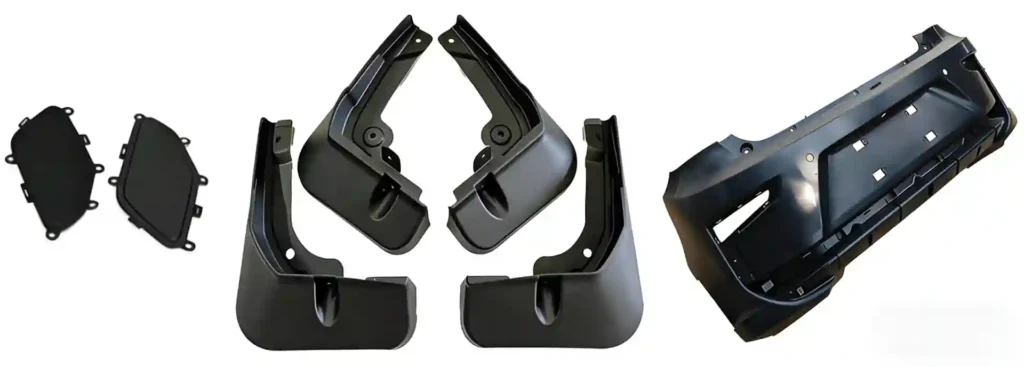
| Area | Components |
|---|---|
| Interior | Dashboard trim, door handles, center consoles, air vents, glove boxes |
| Exterior | Grilles, mirror housings, lighting bezels, emblems |
| Under‑hood | Engine covers, fluid reservoirs, connectors, sensors, fans |
| Powertrain | Intake manifolds, throttle bodies, oil pans |
| Electrical | Connectors, fuse boxes, wire harness components |
| Lighting | Headlamp reflectors, lens covers, light guides |
Real‑scenario example: A tier‑1 supplier needed a complex air intake manifold for a new engine platform. The part had multiple snap‑fits, required glass‑filled nylon, and had to withstand continuous under‑hood temperatures. Our team designed a family mold with four slides, ran mold flow simulation to optimize gate locations, and delivered PPAP Level 3 documentation with the first parts. The program has run for five years with zero defects.
For complex under‑hood components, see our high‑performance materials expertise .
Materials for Automotive Injection Molding

| Material | Applications | Key Properties |
|---|---|---|
| Polypropylene (PP) | Interior trim, ducts, battery cases | Low cost, chemical resistant, flexible |
| ABS | Consoles, trim, housings | Good impact, surface finish |
| PC/ABS | Instrument panels | Heat resistance, impact strength |
| Nylon 6/6 (PA66) | Under‑hood components, connectors | High heat, oil resistant, strong |
| Glass‑filled Nylon (PA66-GF30) | Intake manifolds, structural parts | Very high strength, heat resistance |
| PBT | Electrical connectors | Dimensional stability, heat resistant |
| POM (Acetal) | Gears, clips, fasteners | Low friction, wear resistant |
| TPV | Weather seals, gaskets | Flexible, UV resistant |
We help you select the right material for each application, considering:
- Operating temperature range
- Chemical exposure (oil, fuel, coolant)
- Mechanical loads
- Regulatory requirements (VOC, flammability)
- Cost targets
Quality Assurance for Automotive Parts
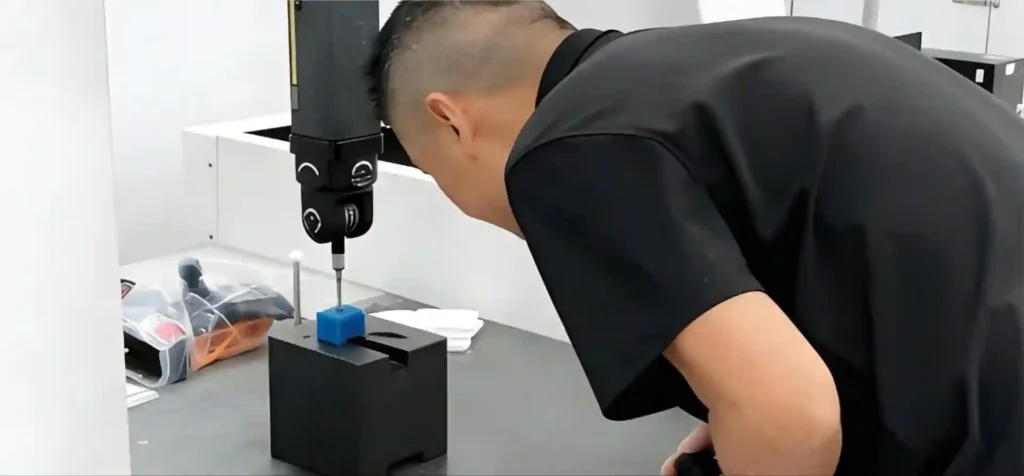
Automotive quality is non‑negotiable. A failed part can stop an assembly line or cause a recall. Our quality system includes:
PPAP (Production Part Approval Process)
We provide PPAP Level 3 documentation including:
- Design records
- Engineering change documents
- Process flow diagrams
- Control plan
- FMEA (Failure Mode and Effects Analysis)
- Full dimensional results
- Material certifications
- Capability studies (Cpk ≥ 1.33)
In‑Process Controls
- SPC monitoring of critical dimensions
- Real‑time process parameter recording
- Visual inspection at defined intervals
- First‑article and last‑article inspection
Traceability
Every batch is traceable to:
- Material lot number
- Machine and operator
- Date and shift
- Process parameters
For more on our quality approach, see our quality management commitment .
Design Considerations for Automotive Parts
Wall Thickness
Uniform walls (2–3 mm typical) ensure consistent cooling and minimize warpage. For large parts, ribs add strength without increasing thickness.
Draft Angles
Adequate draft (1–2°) ensures clean ejection. For textured surfaces, add 1° per 0.001″ of texture depth.
Ribs and Bosses
Ribs should be 50–60% of nominal wall thickness. Bosses should have support ribs to prevent sinking.
Gate Location
Gate placement affects fill pattern, weld lines, and aesthetics. We use mold flow simulation to optimize gate location.
Tolerances
Automotive parts often require tight tolerances:
- Interior fit surfaces: ±0.1 mm
- Mounting points: ±0.2 mm
- Non‑critical dimensions: ±0.5 mm
For detailed design guidelines, refer to our injection molding design guide .
Our Automotive Molding Process
Step 1 – Design Review
We analyze your 3D model and provide DFM feedback. We identify potential issues and suggest improvements before tooling starts.
Step 2 – Material Selection
Based on your application, we recommend the right material and grade. We source from approved suppliers with full traceability.
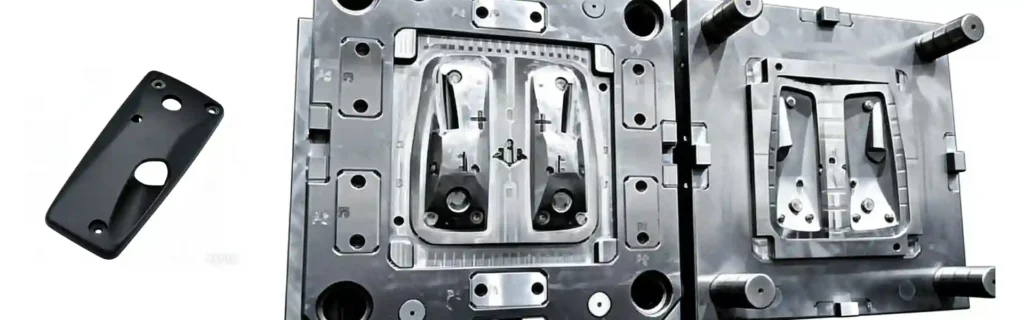
Step 3 – Mold Design & Manufacturing
Our toolmakers design molds for automotive production:
- Multi‑cavity tools for high volume
- Hot runner systems for faster cycles
- Hardened steel for long life (H13, D2)
- Cooling optimization for uniform temperatures
Step 4 – Sampling & PPAP
We run samples and provide:
- Full dimensional report
- Material certifications
- Capability studies
- PPAP documentation (as required)
Step 5 – Production & Quality Control
Once approved, we move to production. We monitor key parameters, inspect parts throughout the run, and provide regular reports.
Step 6 – Logistics
We offer flexible shipping options: EXW, FOB, CIF, DAP, DDP. We can manage inventory and schedule deliveries to match your production needs.
Common Challenges and Solutions
| Challenge | Solution |
|---|---|
| Warpage in large panels | Balanced cooling, uniform wall thickness |
| Sink marks on cosmetic surfaces | Rib design, core out thick sections |
| Weld lines in high‑stress areas | Gate optimization, mold flow simulation |
| Dimensional variation over time | SPC monitoring, material moisture control |
| Flash on parting line | Mold maintenance, clamp force adjustment |
| Glass‑filled material wear | Hardened steel, wear coatings |
Real‑scenario risk: A client had a large interior panel that warped after molding. We discovered the cooling channels were unbalanced, causing one side to cool faster. We redesigned the cooling layout, and the warpage disappeared.
Frequently Asked Questions
Q1: Do you have IATF 16949 certification?
A: We operate with IATF 16949 compliant processes. For specific certification requirements, we can work within your quality system.
Q2: Can you provide PPAP documentation?
A: Yes, we provide PPAP Level 3 documentation including dimensional reports, material certifications, and capability studies.
Q3: What volumes do you handle for automotive parts?
A: We specialize in high‑volume production – from 50,000 to millions of parts per year. We design tools accordingly.
Q4: Can you mold glass‑filled nylon for under‑hood applications?
A: Yes, we regularly mold PA66-GF30 and other glass‑filled grades for under‑hood components.
Q5: Do you offer family molds for automotive assemblies?
A: Yes, family molds can produce multiple parts in one cycle, reducing tooling cost and ensuring consistent fit.
Q6: How do you ensure parts meet specifications over time?
A: We use SPC to monitor critical dimensions and adjust processes before parts go out of spec.
For troubleshooting dimensional issues, see our injection molding defects guide .