
Electronics & Electrical Enclosure Molding
Every electronic device needs a housing that protects its internal components. From consumer gadgets to industrial controls, custom electronic enclosures must meet strict requirements for fit, safety, and durability. At Miracles Manufacturing, we specialize in injection molding for electronics and electrical applications. We produce enclosures, housings, connectors, and components that meet UL94 flame ratings, provide EMI shielding when needed, and hold tight tolerances for PCB fit. This page explains our capabilities, the materials we work with, and how we help electronics manufacturers bring reliable products to market.
Why Choose Miracles for Electronics Molding
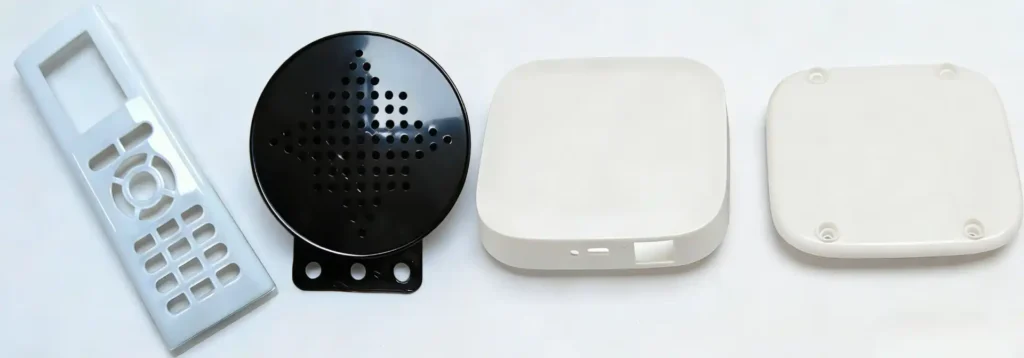
Precision for PCB Fit
Electronic enclosures must align perfectly with printed circuit boards. Mounting bosses, standoffs, and card guides need tight tolerances – typically ±0.1 mm or better. Our all‑electric machines and precision tooling deliver consistent parts run after run.
Material Expertise
We work with a wide range of materials for electronics:
- ABS – general‑purpose housings, good impact
- PC/ABS – improved heat resistance, toughness
- Polycarbonate (PC) – transparent covers, high impact
- Nylon (PA6, PA66) – connectors, structural parts
- PBT – high‑temperature connectors, bobbins
- LCP – thin‑wall connectors, SMT components
- TPE – cable strain reliefs, seals, gaskets
Flame Retardant Grades
We source UL94 V‑0, V‑2, and HB rated materials for applications requiring fire safety. Certifications available upon request.
EMI/RFI Shielding Options
For sensitive electronics, we offer:
- Conductive plastics (carbon fiber, stainless steel filled)
- Secondary metal plating
- In‑mold shielding films
- Design features for gasket mounting
In‑House Tooling
We design and build molds specifically for electronics:
- Multi‑cavity tools for high volume
- Hot runner systems for faster cycles
- Slides and lifters for complex features
- Polish to SPI A1 for cosmetic surfaces
For a complete overview of our capabilities, see our custom injection molding services .
Applications in Electronics
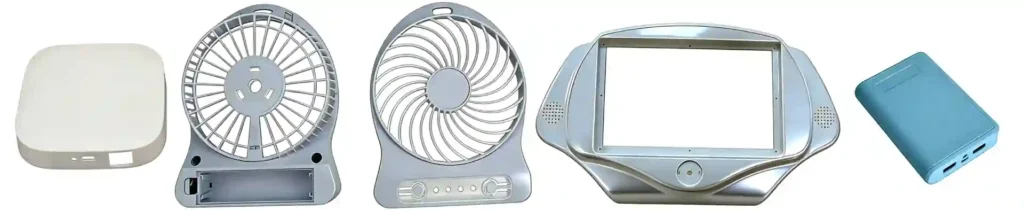
| Category | Components |
|---|---|
| Consumer electronics | Smart device housings, remote controls, speaker grilles |
| Industrial controls | PLC housings, HMI bezels, sensor enclosures |
| Medical electronics | Monitor housings, diagnostic equipment cases |
| Telecommunications | Router enclosures, antenna covers, connector housings |
| Power supplies | Adapter cases, battery housings, charger bodies |
| Automotive electronics | ECU housings, sensor bodies, display bezels |
| Lighting | LED housings, light covers, diffusers, reflectors |
Real‑scenario example: A manufacturer of industrial sensors needed a rugged enclosure that could withstand harsh factory environments – dust, vibration, and occasional impacts. We designed a PC/ABS housing with integrated mounting bosses, IP67 gasket groove, and snap‑fit assembly. The parts passed all environmental tests and are now in production.
For enclosures requiring gaskets or seals, see our overmolding and insert molding services .
Materials for Electronics Enclosures

| Material | Key Properties | UL Ratings | Typical Applications |
|---|---|---|---|
| ABS | Good impact, surface finish | HB, V‑0 | Consumer housings, remote controls |
| PC/ABS | Heat resistance, toughness | V‑0, V‑2 | Industrial controls, automotive |
| Polycarbonate | Clear, impact resistant | V‑2, V‑0 | Transparent covers, lenses |
| Nylon 6/6 | Strong, heat resistant | HB, V‑2 | Connectors, bobbins |
| PBT | High heat, dimensional stability | V‑0 | SMT connectors, coil formers |
| LCP | Very high heat, thin‑wall flow | V‑0 | Miniature connectors, SMT components |
| PPE/PS | Low moisture, electrical properties | V‑0, V‑1 | Electrical housings, insulators |
We help you select the right material based on:
- Flammability requirements (UL94)
- Operating temperature
- Impact resistance needed
- Transparency requirements
- Cost targets
For detailed material guidance, refer to our material selection guide .
Flame Retardant Materials (UL94)
Many electronic enclosures must meet UL94 flammability standards:
| Rating | Description | Typical Applications |
|---|---|---|
| V‑0 | Burning stops within 10 seconds, no dripping | Power supplies, industrial controls |
| V‑2 | Burning stops within 30 seconds, dripping allowed | Consumer electronics |
| HB | Slow burning on horizontal sample | General‑purpose housings |
We source UL‑recognized materials and can provide UL yellow cards upon request. For critical applications, we can help you design for compliance.
EMI/RFI Shielding Options
When electronics must not emit or receive interference, shielding is required. We offer several approaches:
Conductive Plastics
Materials filled with:
- Stainless steel fibers
- Carbon fibers
- Nickel‑coated carbon fibers
These provide 40–60 dB shielding effectiveness while maintaining moldability.
Secondary Plating
Parts can be plated with copper, nickel, or silver after molding. This provides excellent shielding but adds cost and lead time.
Conductive Coatings
Spray‑on conductive paints (nickel, silver, copper) can be applied to internal surfaces.
Design for Shielding Gaskets
We design features for mounting conductive gaskets in enclosure seams.
In‑Mold Shielding Films
Films with conductive layers can be placed in the mold and overmolded.
Design Considerations for Electronic Enclosures
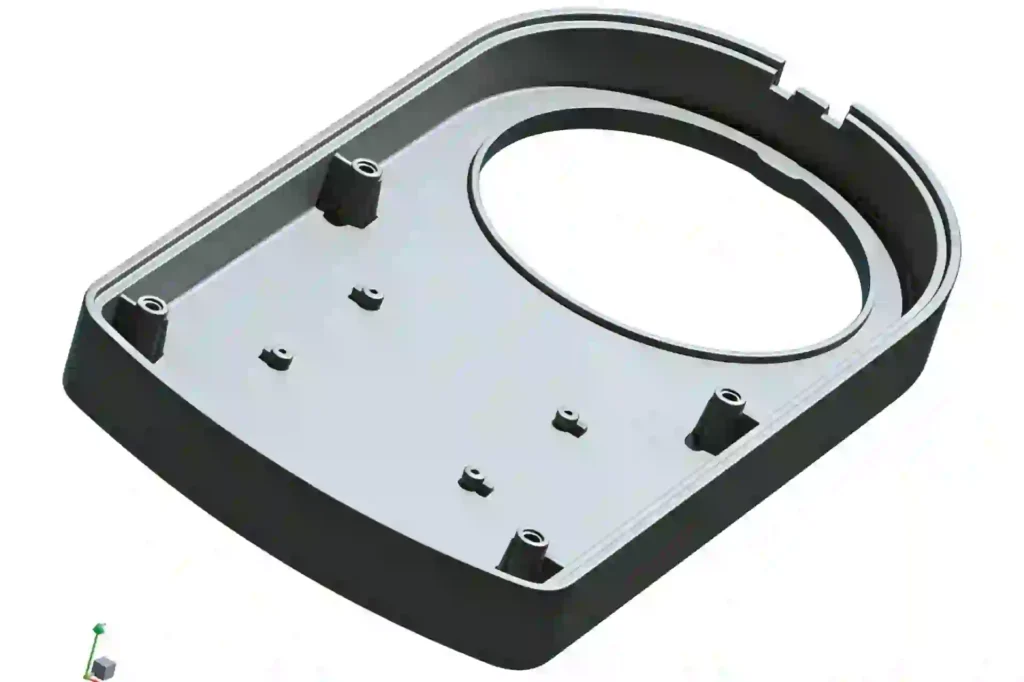
Wall Thickness
Typical walls are 1.5–2.5 mm. Uniform thickness prevents sink marks and warpage. Thin walls save material but need good flow.
Bosses and Standoffs
For PCB mounting, bosses should have:
- Adequate wall thickness (0.5–0.7× nominal)
- Support ribs to prevent sinking
- Draft for ejection
Snap‑Fits
Snap‑fits allow assembly without screws. We design them for:
- Adequate deflection (strain ≤ material limit)
- Mating angle for assembly force
- Return angle for retention
Living Hinges
For battery covers or access doors, living hinges can be integrated – but only with appropriate materials (PP, PE).
Gasket Grooves
For waterproof enclosures (IP67, IP68), we design grooves for O‑rings or foam gaskets. Groove dimensions must match gasket compression.
Texturing
Textured surfaces hide scratches and improve grip. We offer MT, VDI, and SPI finishes. For textured areas, add 1° draft per 0.001″ texture depth.
For design best practices, see our injection molding design guide .
Our Electronics Molding Process
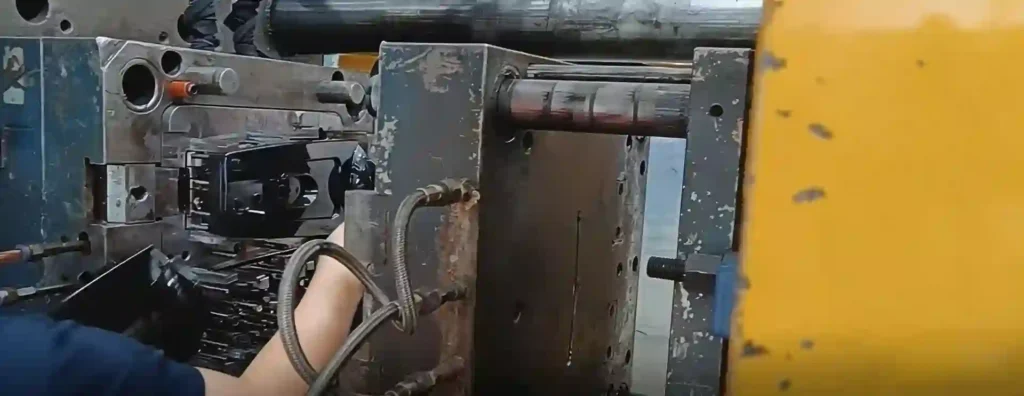
Step 1 – Design Review
Send us your 3D model. Our engineers analyze:
- Wall thickness and uniformity
- Boss and rib design
- Gate placement and weld lines
- Ejection and draft
- Material selection for flame rating and performance
Step 2 – Material Selection
Based on your requirements, we recommend the optimal material and grade. We source UL‑recognized materials with full traceability.
Step 3 – Mold Design & Manufacturing
Our toolmakers design molds for electronics production:
- Multi‑cavity for high volume
- Hot runner systems for faster cycles
- Polished cavities for cosmetic surfaces (SPI A1, A2)
- Slides for complex features
- Cooling optimization for uniform quality
Step 4 – Sampling & Testing
We run samples and test:
- Dimensional accuracy (CMM)
- Fit with PCBs or mating parts
- Flame retardancy (if required)
- EMI shielding effectiveness (if applicable)
- Environmental resistance
Step 5 – Production & Quality Control
Once approved, we move to production. We monitor critical dimensions with SPC and inspect parts throughout the run.
Quality Assurance for Electronics
| Requirement | Our Approach |
|---|---|
| Dimensional accuracy | CMM inspection, first‑article reports |
| UL compliance | Material certifications, UL yellow cards |
| EMI shielding | Shielding effectiveness testing on request |
| Cosmetic appearance | Visual inspection under controlled lighting |
| Traceability | Batch records, date codes, serialization |
| ESD control | ESD‑safe handling for sensitive components |
We can provide:
- Material certifications (UL, RoHS, REACH)
- Dimensional reports
- First‑article inspection reports
- PPAP documentation if required
Common Challenges and Solutions
| Challenge | Solution |
|---|---|
| PCB doesn’t fit | Tighten boss tolerances, verify with first articles |
| Enclosure warps after assembly | Balance cooling, reduce stress, anneal if needed |
| Snap‑fit breaks | Increase fillet radius, adjust material, reduce strain |
| Flame retardant part fails UL test | Verify material grade, check processing temps |
| EMI shielding insufficient | Increase filler content, add secondary shielding |
| Water ingress at seam | Redesign gasket groove, check compression |
Real‑scenario risk: A client’s outdoor enclosure failed IP67 testing – water leaked through the seam. We discovered the gasket groove was too shallow, causing insufficient compression. We deepened the groove, requalified the parts, and they passed.
Frequently Asked Questions
Q1: Do you offer flame-retardant materials for electronic enclosures?
A: Yes, we can source and mold flame-retardant materials that meet UL94 V-0, V-2, and HB standards. We work with reputable resin suppliers who provide UL-recognized materials. For applications requiring formal UL certification of the finished product, we can help you navigate the process and provide material documentation to support your submission.
Q2: Do you offer EMI shielding?
A: Yes, we offer conductive plastics, secondary plating, and design features for shielding gaskets.
Q3: What is the typical lead time for an enclosure mold?
A: 8–12 weeks for production tools. Prototype tools (aluminum) in 3–5 weeks.
Q4: Can you mold clear polycarbonate enclosures?
A: Yes, we mold clear PC for display covers, lenses, and transparent housings.
Q5: Do you offer in‑mold labeling for logos?
A: Yes, we can integrate IML for permanent graphics and branding.
Q6: What is the minimum order quantity for electronics enclosures?
A: We handle prototype runs (hundreds) and high‑volume production (millions). Ideally we hope to get orders with at least 1000 shots..
For troubleshooting common molding defects, see our defects and troubleshooting guide .