
A small design change can save thousands of dollars in tooling costs. That is the power of Design for Manufacturability (DFM). At Miracles Manufacturing, we offer DFM analysis for injection molding as a standard part of our service. Our engineers review your 3D model before any steel is cut, identifying potential issues that could lead to defects, slow cycles, or expensive mold modifications. This injection molding design review covers wall thickness, draft angles, gate placement, and more. In this guide, we explain what DFM is, why it matters, and how our DFM injection molding expertise helps you get better parts, faster.
What Is DFM Analysis?
DFM stands for Design for Manufacturability. It is the process of evaluating a part design to ensure it can be manufactured efficiently and cost-effectively. For injection molding, DFM analysis focuses on:
- Geometry – Are walls uniform? Are there sharp corners that cause stress?
- Draft – Will the part eject cleanly?
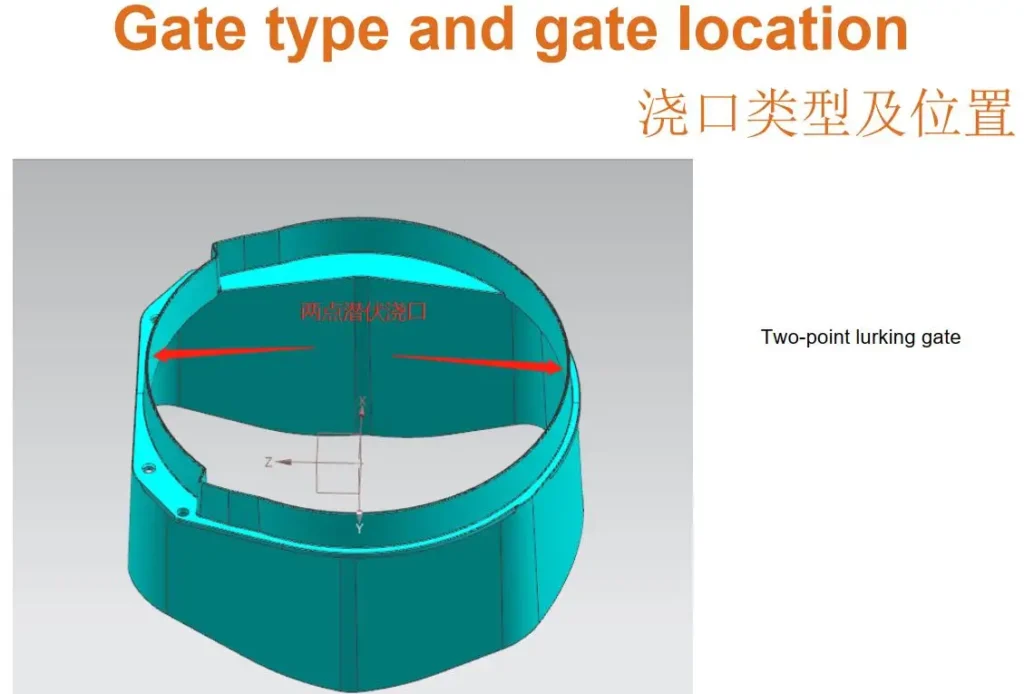
- Gates – Where should the plastic enter for optimal flow?
- Cooling – Will the part cool evenly?
- Ejection – How will the part come out without damage?
- Tolerances – Are they realistic for the material?
The goal is to catch problems early – when they are cheap to fix. A design change in CAD costs nothing. A change after the mold is built can cost thousands and delay your launch.
A common pitfall: Some clients rush to cut steel without DFM review. They end up with a mold that does not work, or parts that have defects. The savings they hoped for vanish in rework costs.
For a complete overview of our engineering capabilities, see how we support product development .
Why DFM Matters for Your Project
Reduces Tooling Costs
A mold is the biggest expense in injection molding. DFM analysis ensures the mold is designed right the first time. No rework, no surprises.
Prevents Defects
Many common defects – sink marks, weld lines, warpage – start in the design. DFM identifies and fixes them before production.
Shortens Time to Market
Fewer mold trials, fewer revisions. Your parts go from design to production faster.
Lowers Part Cost
Optimized designs cycle faster, use less material, and have higher yields. Every part costs less.
Improves Part Quality
Better design means consistent, reliable parts that meet your specifications.
Real‑scenario example: A client came to us with a thick-walled part that would have taken 60 seconds to cool. Our DFM review suggested coring out the thick sections and adding ribs for strength. The redesigned part cooled in 25 seconds – 40% faster cycle time. They saved thousands on every production run.
What We Review in a DFM Analysis
Wall Thickness
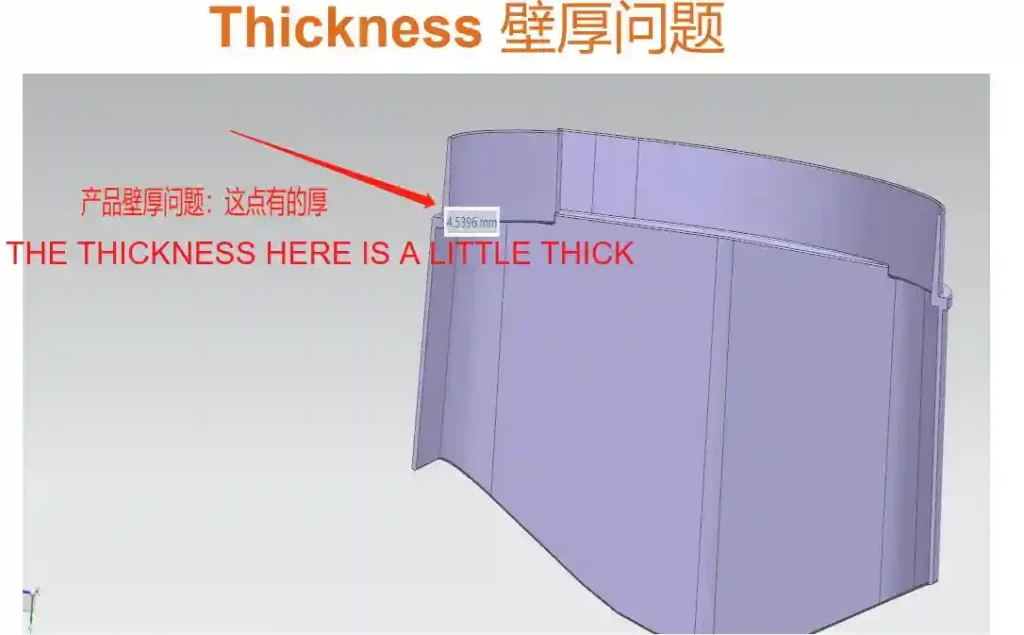
Uniform walls are essential. Thick sections cause sink marks and long cycles. Thin sections may not fill. We check:
- Is wall thickness consistent (typically 2–3 mm)?
- Are transitions gradual?
- Are ribs and bosses properly sized (ribs ≤ 60% of nominal wall)?
Draft Angles
Parts need taper to eject. We check:
- Is there at least 1° draft on vertical walls?
- Is draft adequate for textured surfaces? (add 1° per 0.001″ texture depth)
- Are ribs and bosses drafted?
Gate Location
Gate placement affects fill, weld lines, and aesthetics. We use mold flow simulation to:
- Find the best gate location
- Predict weld lines and air traps
- Ensure balanced fill for multi-cavity molds
Ribs and Bosses
Ribs add strength without adding thickness. We check:
- Rib thickness (≤ 60% of wall)
- Rib height (≤ 3× wall thickness)
- Boss design (adequate wall thickness, support ribs if needed)
Corners and Radii
Sharp corners create stress and impede flow. We recommend:
- Inside radii at least 0.5× wall thickness
- Outside radii at least 1.5× wall thickness
Undercuts
Undercuts need slides or lifters, which add cost. We look for:
- Can the part be redesigned to avoid undercuts?
- If not, are slides and lifters feasible?
Tolerances
Tight tolerances cost more. We check:
- Are tolerances realistic for the material?
- Can we achieve them with standard processes?
For complex parts requiring slides or lifters, explore our advanced mold engineering services .
Our DFM Analysis Process
Step 1 – Submit Your Design
Send us your 3D model (STEP, IGES, STP, or native CAD files). Include:
- Material preference (or let us suggest)
- Target volume
- Critical dimensions or functional requirements
- Any special needs (cosmetic surface, tight tolerances)
Step 2 – Engineering Review
Our team reviews your design within 48 hours. We analyze:
- Geometry and wall thickness
- Draft and ejection
- Gate and runner system
- Cooling and cycle time
- Potential defects
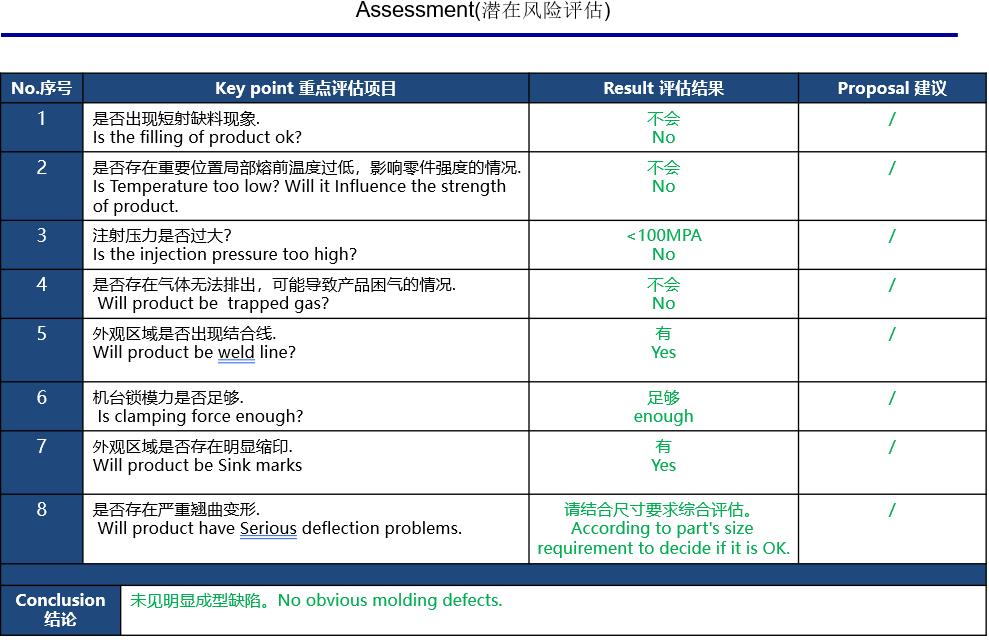
Step 3 – DFM Report
You receive a detailed report with:
- Color-coded images highlighting issues
- Specific recommendations for improvement
- Suggested gate locations
- Estimated cycle time and tooling cost
- Alternative material options (if beneficial)
Step 4 – Discussion
We walk you through the findings. You can ask questions, suggest changes, or request additional analysis. No pressure – just information.
Step 5 – Design Optimization
If you want us to modify your design, we can do that too. We’ll update the model and re‑run the analysis until you are satisfied.
Common DFM Findings and Fixes
| Issue | Typical Finding | Recommended Fix |
|---|---|---|
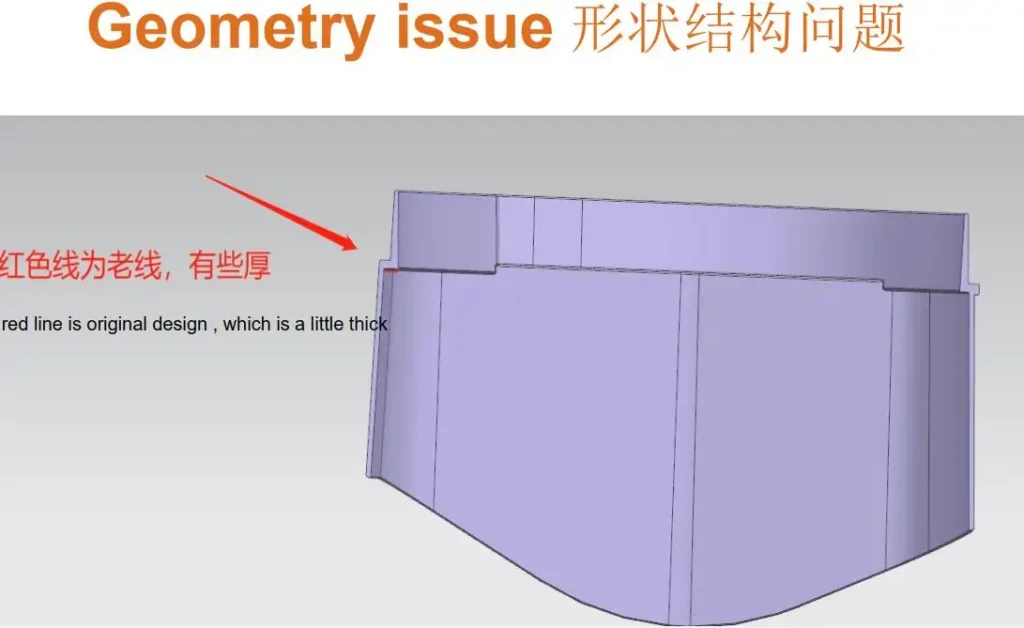
| Thick wall | 5 mm wall in area, will cause sink | Core out, reduce to 2.5 mm, add ribs |
| No draft | Vertical wall with 0° draft | Add 1–2° draft, more if textured |
| Sharp corner | Inside corner with 0 radius | Add radius (0.5× wall) |
| Rib too thick | Rib thickness = wall thickness | Reduce rib to 0.5×–0.6× wall |
| Gate poorly placed | Weld line in high‑stress area | Move gate, add flow leaders |
| Tolerance too tight | ±0.05 mm on 100 mm dimension in PP | Loosen to ±0.15 mm or suggest PC |
Real‑scenario risk: We reviewed a part with a 6 mm thick boss. The client wanted ±0.1 mm tolerance on the hole. We explained that thick bosses shrink unpredictably and suggested coring out the boss and using a metal insert. They saved the cost of reworking the mold later.
DFM vs. Mold Flow Simulation
DFM and mold flow simulation work together:
- DFM – A broad review of design principles. Fast, low-cost, catches most issues.
- Mold flow simulation – Detailed analysis of flow, cooling, warpage. Used for complex parts or when DFM identifies potential problems.
We offer both. For simple parts, DFM is enough. For complex geometries, we recommend mold flow simulation.
For a deeper understanding of how we optimize designs, read our guide to injection mold design .
DFM for Different Materials
Different materials have different design rules:
| Material | Wall Thickness | Draft | Shrinkage | Special Considerations |
|---|---|---|---|---|
| ABS | 1.5–4.0 mm | 0.5–1° | 0.4–0.7% | Good flow, easy to mold |
| Polycarbonate | 1.5–3.0 mm | 1–2° | 0.5–0.7% | Needs drying, stress‑sensitive |
| Nylon | 1.5–3.0 mm | 1–2° | 0.5–1.5% | Moisture‑sensitive, glass-filled is abrasive |
| Polypropylene | 1.5–3.0 mm | 0.5–1° | 1.0–2.5% | Flexible, living hinges possible |
| Glass-filled | 1.5–3.0 mm | 1–3° | 0.2–0.8% | Anisotropic shrinkage, abrasive |
Our DFM analysis considers your chosen material and adjusts recommendations accordingly.
Frequently Asked Questions
Q1: How long does a DFM analysis take?
A: Most reviews are completed within 48 hours of receiving your 3D model. Complex parts may take a bit longer.
Q2: What file formats do you accept?
A: STEP, IGES, STP, X_T, and native files like SolidWorks or UG NX. STL is okay but less precise.
Q3: Do you charge for DFM analysis?
A: For qualified projects, we include DFM as part of our quoting process as per customer’s request. No upfront cost.
Q4: Can you modify my design based on DFM feedback?
A: Yes, we can update your 3D model or create a new one with our recommended changes.
Q5: What if I ignore some DFM recommendations?
A: That is your choice. We will build the mold as you specify, but we cannot guarantee the same quality or cycle time.
Q6: Does DFM guarantee no defects?
A: DFM significantly reduces the risk of defects, but no process is 100% perfect. Combined with good mold design and process control, it gets you as close as possible.
For more detailed design guidelines, refer to our comprehensive DFM guide .