
Industrial equipment demands components that can withstand constant wear, heavy loads, harsh chemicals, and extreme temperatures. From gears and bearings to pump housings and valve components, industrial plastic components must perform reliably for years. At Miracles Manufacturing, we specialize in injection molding for industrial applications. Our team has decades of experience producing durable parts using engineering plastics like nylon, acetal, PEEK, and glass‑filled materials. This page explains our capabilities, the materials we work with, and how we help industrial clients achieve long‑lasting, cost‑effective solutions.
Why Choose Miracles for Industrial Molding

Experience with Demanding Applications
Our engineers have molded thousands of industrial parts – from small precision gears to large structural housings. We understand the unique challenges:
- Wear resistance – parts must survive constant friction
- Chemical exposure – oils, solvents, coolants
- Temperature extremes – from freezer to under‑hood heat
- Mechanical loads – gears, bearings, structural components
Material Expertise
We work with a wide range of engineering plastics:
- POM (Acetal) – gears, bushings, low‑friction parts
- Nylon (PA6, PA66, glass‑filled) – high strength, wear resistant
- PEEK – extreme temperature, chemical resistance
- Polycarbonate – impact‑resistant housings
- ABS – general‑purpose enclosures
- UHMW‑PE – wear strips, liners
We design and build molds for industrial production:
- Multi‑cavity tools for high volume
- Hardened steel for long life (H13, D2)
- Slides and lifters for complex features
- Cooling optimization for uniform part quality
Quality You Can Rely On
We inspect every part for dimensions, material properties, and performance. Our quality system includes:
In‑House Tooling
- First‑article inspection with CMM
- In‑process SPC monitoring
- Material certifications
- Functional testing as required
For a complete overview of our capabilities, visit our custom injection molding services page .
Applications in Industrial Equipment

| Industry | Components |
|---|---|
| Industrial machinery | Gears, pulleys, bearings, wear strips, handles |
| Fluid handling | Pump housings, impellers, valve bodies, seals |
| Material handling | Conveyor rollers, guides, chain guides, bins |
| Power tools | Housings, handles, triggers, battery casings |
| Agricultural equipment | Tractor knobs, sprayer parts, irrigation components |
| Construction | Tool housings, pipe fittings, fasteners |
| Chemical processing | Tank liners, valve seats, corrosion‑resistant parts |
Real‑scenario example: A manufacturer of industrial pumps needed a corrosion‑resistant impeller that could handle aggressive chemicals at high temperatures. We recommended PEEK, designed a mold with multi‑cavity layout, and produced thousands of impellers with consistent dimensions and no failures in the field.
For complex fluid‑handling components, see our high‑performance materials expertise .
Materials for Industrial Components
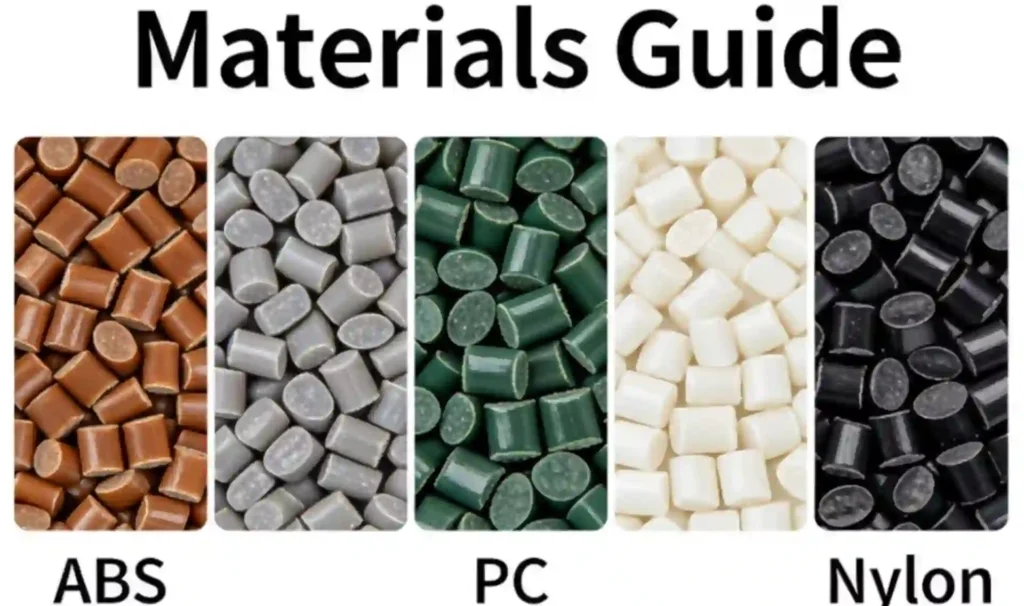
| Material | Key Properties | Typical Applications |
|---|---|---|
| POM (Acetal) | Low friction, wear resistant, stable | Gears, bushings, bearings, valve seats |
| Nylon 6/6 (PA66) | Strong, tough, wear resistant | Gears, rollers, structural parts |
| Glass‑filled Nylon (PA66-GF30) | Very high strength, heat resistant | Pump housings, brackets, under‑hood components |
| PEEK | High temp (260°C), chemical resistant | Seals, impellers, medical/industrial |
| UHMW‑PE | Extremely wear resistant, low friction | Wear strips, chute liners, conveyor guides |
| Polycarbonate | Impact resistant, transparent | Machine guards, sight glasses |
| ABS | Tough, good surface finish | Enclosures, covers, handles |
| PTFE (Teflon) | Low friction, non‑stick | Bearings, seals, liners |
We help you select the right material based on:
- Load and wear requirements
- Chemical exposure
- Operating temperature
- Cost targets
For detailed material guidance, refer to our material selection guide .
Design Considerations for Industrial Parts
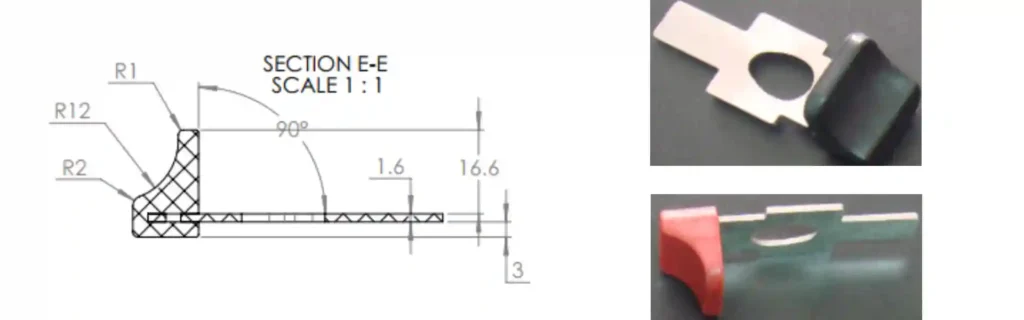
Strength and Wear
Industrial parts often require:
- Ribs and gussets – increase stiffness without added weight
- Generous radii – reduce stress concentrations
- Uniform wall thickness – prevent warpage and weak spots
Tolerances
Moving parts like gears and bearings need tight tolerances – typically ±0.05 mm for critical features. We design molds and processes to achieve these consistently.
Inserts
Many industrial parts need metal inserts for threads or reinforcement. We offer insert molding to embed nuts, studs, or sleeves directly into the plastic.
Chemical Resistance
If parts contact oils or solvents, choose materials that resist them. We can recommend additives or coatings for extra protection.
For design best practices, see our injection molding design guide .
Our Industrial Molding Process
Step 1 – Design Review
Send us your 3D model. Our engineers analyze it for:
- Wall thickness and strength
- Gate placement and fill pattern
- Potential warpage or sink marks
- Ejection and draft
Step 2 – Material Selection
Based on your application, we recommend the optimal material and grade. We source from trusted suppliers with full traceability.
Step 3 – Mold Design & Manufacturing
Our toolmakers design molds for industrial production:
- Multi‑cavity for high volume
- Hardened steel for long life
- Slides and lifters for complex features
- Cooling optimization for uniform quality
Step 4 – Sampling & Testing
We run samples and test:
- Dimensional accuracy (CMM)
- Material properties (hardness, strength)
- Functional performance (wear, load)
Step 5 – Production & Quality Control
Once approved, we move to production. We monitor critical dimensions with SPC and inspect parts throughout the run.
Quality Assurance for Industrial Parts
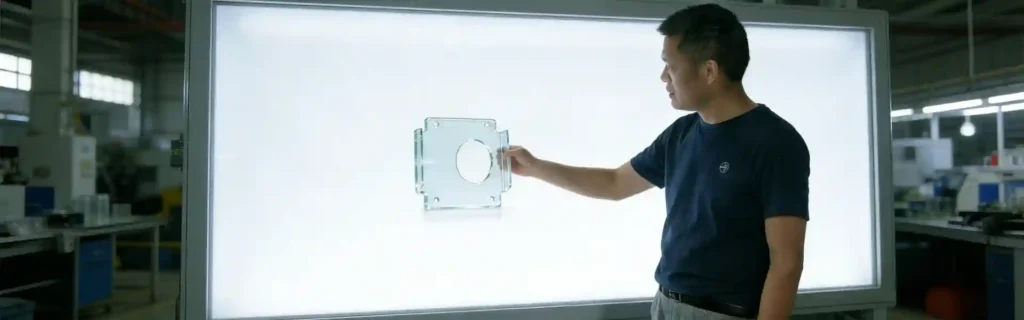
| Requirement | Our Approach |
|---|---|
| Dimensional accuracy | CMM inspection, first‑article reports |
| Material consistency | Certificates of analysis, lot traceability |
| Wear resistance | On‑request testing (Taber abrasion) |
| Strength | Tensile/impact testing as needed |
| Traceability | Batch records, date codes, serialization |
We can provide:
- PPAP documentation if required
- Material certifications
- Dimensional reports
- Process validation data
Common Challenges and Solutions
| Challenge | Solution |
|---|---|
| Gear teeth wear prematurely | Choose wear‑resistant material (POM, glass‑filled nylon), ensure proper lubrication |
| Bearing squeaks or binds | Check material pair, add PTFE lubricant, adjust tolerances |
| Housing cracks under load | Increase wall thickness, add ribs, use stronger material |
| Chemical attack | Select chemically resistant material (PEEK, PP), test compatibility |
| Warpage in large parts | Balance cooling, design uniform walls |
| Flash on critical surfaces | Mold maintenance, process optimization |
Real‑scenario risk: A client used standard nylon for a conveyor roller that contacted acidic material. The roller degraded quickly. We switched to UHMW‑PE, which resists both wear and chemicals, and the rollers lasted years.
Frequently Asked Questions
Q1: What is the best material for gears?
A: POM (acetal) is excellent for gears due to its low friction and wear resistance. For higher loads, glass‑filled nylon or PEEK may be better.
Q2: Can you mold parts with metal inserts?
A: Yes, we offer insert molding to embed metal threads, studs, or sleeves directly into the plastic.
Q3: Do you offer glass‑filled nylon for high‑strength parts?
A: Yes, we regularly mold PA66-GF30 and other glass‑filled grades for industrial applications.
Q4: What tolerances can you hold for gears?
A: For precision gears, we can hold ±0.05 mm on tooth profiles with proper mold design and process control.
Q5: Can you help with material selection for chemical resistance?
A: Absolutely. We’ll recommend materials based on the specific chemicals and temperatures your part will encounter.
Q6: What is the minimum order quantity for industrial parts?
A: We handle prototype runs (hundreds) and high‑volume production (millions). Ideally we hope to receive orders with MOQ 1000 shots.
For troubleshooting common molding defects, see our defects and troubleshooting guide .