Not all plastic parts are simple. Some need metal inserts. Some combine two materials. Some require extreme precision. For these projects, you need a partner with deep experience in custom injection molding. At Miracles Manufacturing, we specialize in complex and specialty molding. Our team handles insert molding services, overmolding, two-shot injection molding, and high-precision work. This page explains these processes, when to use them, and why our experience matters. If your part needs more than basic molding, you are in the right place.
Insert Molding Services
What Is Insert Molding?
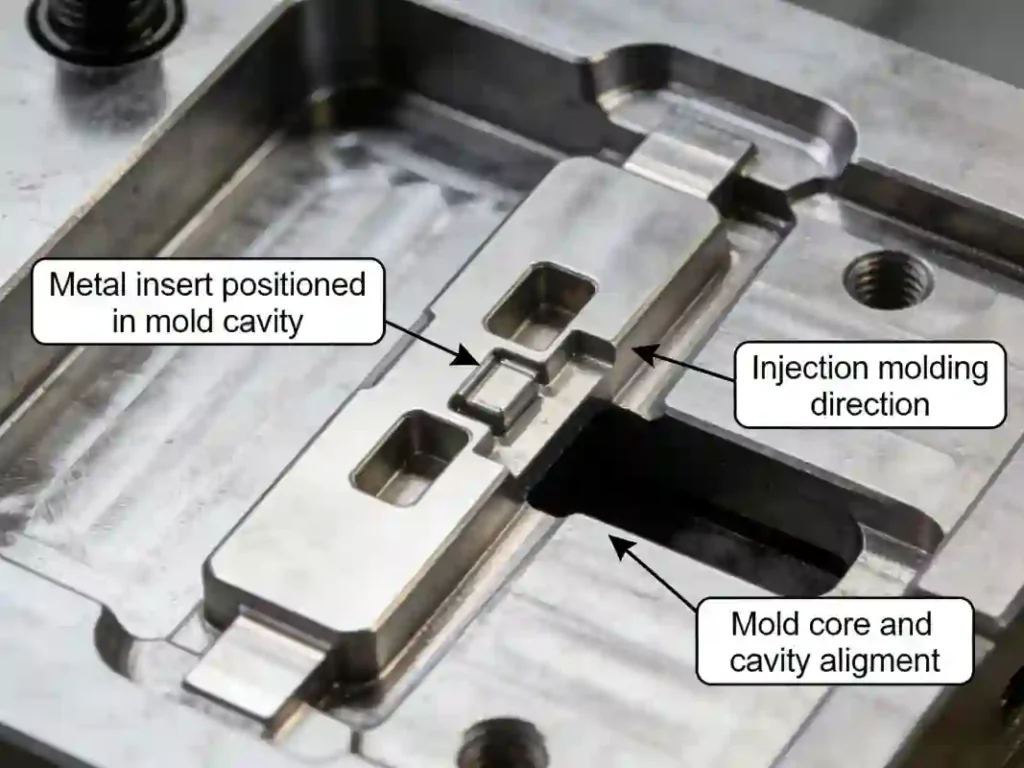
Insert molding places metal or other components into the mold before plastic is injected. The plastic flows around the insert, creating a permanent bond. Common inserts include threaded nuts, pins, contacts, and bushings.
When to Use Insert Molding
- You need strong threads in plastic (brass inserts)
- Electrical contacts must be embedded
- Metal reinforces a plastic part
- You want to combine materials in one step
Benefits
- Stronger than post-mold assembly: The plastic shrinks around the insert, creating a tight grip.
- Faster production: One step instead of molding then pressing inserts.
- Better reliability: No loose inserts, no secondary operations.
Our Process
We design fixtures to hold inserts precisely. In some molds, robots load inserts automatically. We control temperature and pressure to avoid insert damage. Materials we work with include brass, stainless steel, aluminum, and ceramics.
Insert molding needs careful design. If the insert is too hot or cold, the plastic may not bond well. If the plastic shrinks too much, it can crack the insert. Our team has done thousands of insert molding projects. We know how to get it right.
our custom insert molded parts
Overmolding Services
What Is Overmolding?
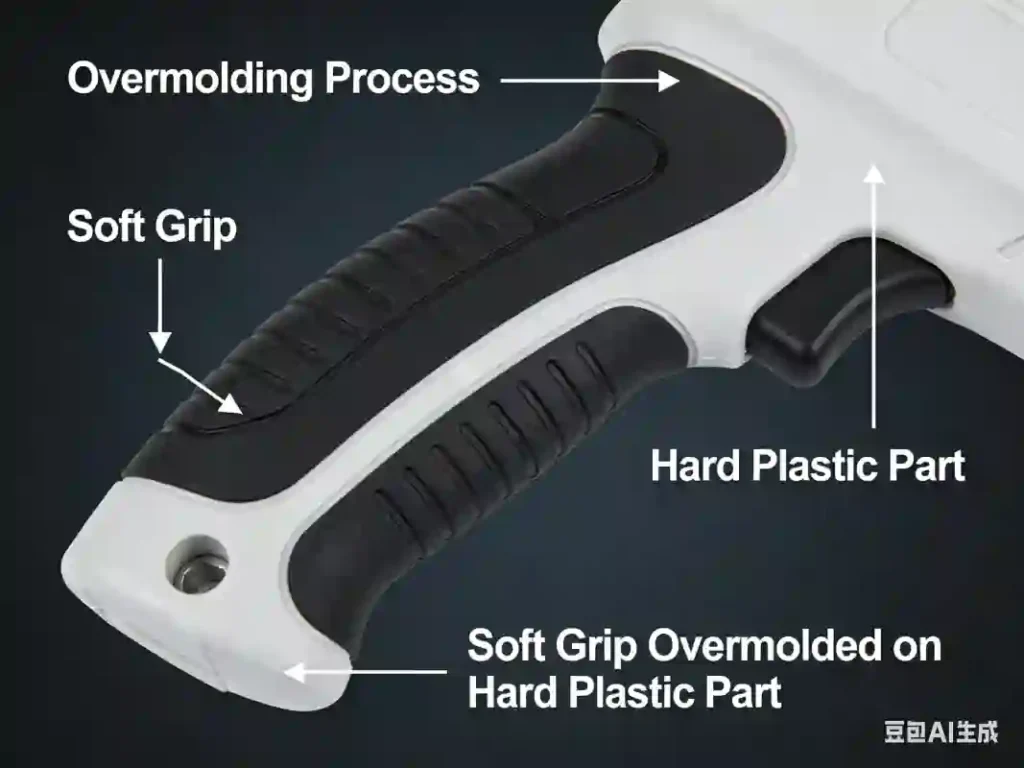
Overmolding adds a second layer of material over a first part. The first part (substrate) goes into a second mold. New material is injected over it. Common uses: soft grips on hard plastic, rubber seals on rigid parts.
Types of Overmolding
- Soft-touch overmolding: TPE or TPU over ABS or PC. For handles, grips, tools.
- Gaskets and seals: Flexible material creates a seal on a rigid frame.
- Color overmolding: Add a second color for logos or designs.
Material Compatibility
Not all materials stick together. We help you choose pairs that bond well. Common pairs:
| Substrate | Overmold Material | Application |
|---|---|---|
| ABS, PC | TPE, TPU | Soft grips |
| Nylon | TPV | Automotive seals |
| PP | TPE (special grade) | Consumer goods |
Overmolding vs. Two-Shot Molding
Overmolding uses two separate molds. The first part is made, moved, then overmolded. Two-shot molding (next section) does both in one machine. Overmolding is more flexible for different volumes. Two-shot is faster for high volume.
Two-Shot (Multi-Material) Injection Molding
What Is Two-Shot Molding?
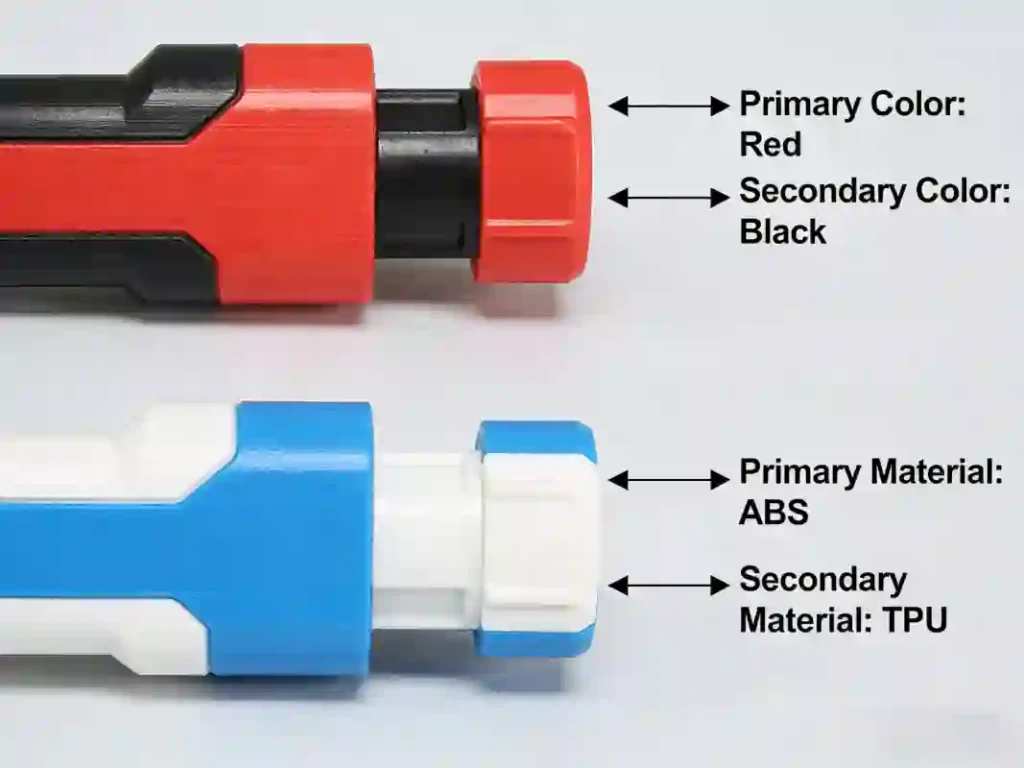
Two-shot molding uses a special machine with two barrels. It injects two materials in one cycle. The mold rotates or slides between shots. The result: a complete part with two materials, perfectly bonded.
Advantages
- No handling: Parts never leave the machine. No alignment issues.
- Faster cycles: One cycle makes finished parts.
- Strong bond: Second material bonds while first is still hot.
- Complex designs: Multi-color, multi-material in one part.
Common Applications
- Toothbrush handles (hard + soft)
- Automotive buttons (hard base + soft feel)
- Seals bonded to rigid frames
- Multi-color logos and branding
Design Considerations
- Materials must be compatible (chemically bond)
- Shrinkage must match to avoid warpage
- Part geometry must allow both shots
Two-shot molding is powerful but complex. The machine costs more. The mold costs more. You need high volume to justify it. We help you decide: two-shot or overmolding? It depends on your parts and volumes.
our two-shot injection molding services
Precision Injection Molding
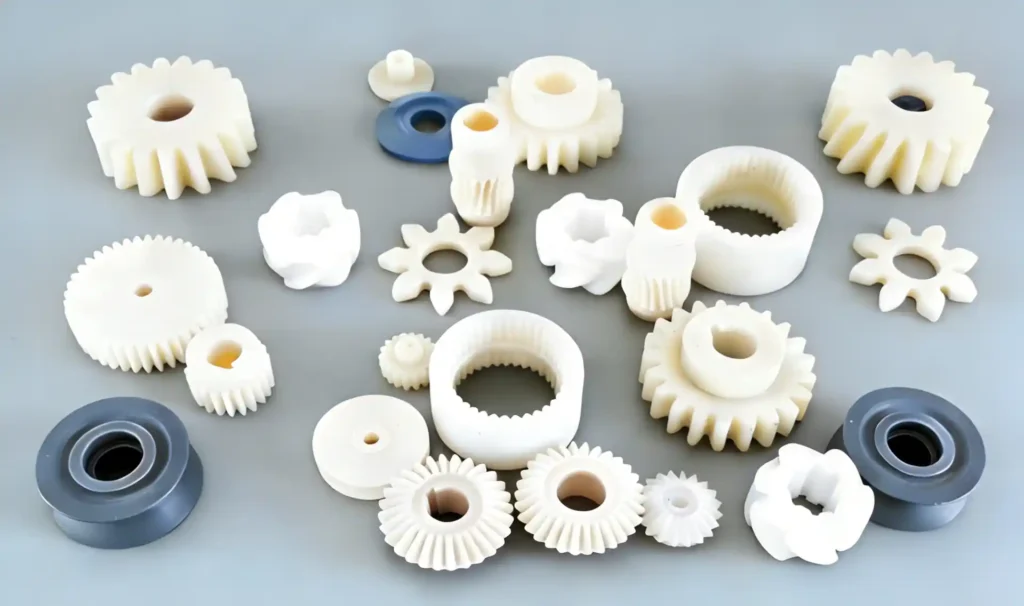
What Is Precision Molding?
Some parts need very tight tolerances. ±0.05 mm or even tighter. This is precision injection molding. It requires:
- High-quality molds
- Stable machines (all-electric preferred)
- Tight process control
- Clean environment
When You Need Precision Molding
- Medical devices (catheters, implants)
- Electrical connectors
- Gears and moving parts
- Optical components (lenses, light guides)
- Parts that must fit exactly with others
Our Precision Molding Capabilities
- All-electric injection molding machines
- In-process monitoring of pressure, temperature, speed
- CMM inspection for every critical dimension
- Cleanroom-compatible production
Materials for Precision Parts
- POM (acetal) – low friction, stable
- PC – transparent, impact resistant
- PEEK – high temperature, medical grade
- LCP – thin-wall, high heat
our precision injection molding services
Gas-Assisted Injection Molding
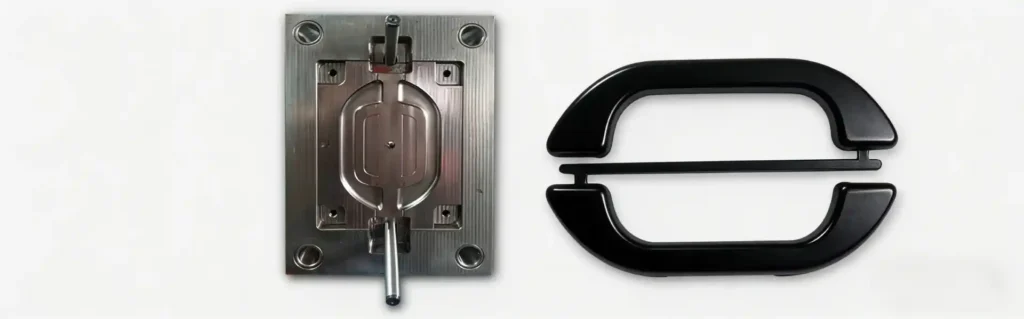
What Is Gas-Assisted Molding?
After plastic fills most of the cavity, nitrogen gas is injected. The gas pushes the plastic, creating hollow sections. This reduces weight and saves material.
Benefits
- Lighter parts: Hollow cores reduce weight 20–40%
- Less warpage: Thick sections become hollow, cooling evenly
- Lower cost: Less material, faster cycles
- Better surface: No sink marks on thick areas
Applications
- Handles and grips
- Automotive parts (mirror housings)
- Thick structural parts
- Furniture components
Thin-Wall Injection Molding
What Is Thin-Wall Molding?
Parts with wall thickness under 1.0 mm (often 0.5–0.8 mm) need thin-wall molding. The plastic must flow fast before it freezes. High-speed injection machines are required.
Applications
- Food containers
- Medical disposables
- Electronic housings
- Thin-wall packaging
Our Capabilities
- High-speed injection machines
- Hot runner molds for fast filling
- Experience with high-flow materials (PP, LCP)
Micro Molding
What Is Micro Molding?
Parts that weigh milligrams. Features measured in microns. Micro molding is a specialty. It needs tiny screws, precise temperature control, and clean conditions.
Applications
- Medical implants
- Micro gears and connectors
- Fiber optic components
- Watch parts
Our Partner Network
For micro molding, we work with specialized partners. We help you find the right solution, even for the tiniest parts.
In-Mold Decoration and Labeling
In-Mold Labeling (IML)
Labels are placed in the mold before injection. Plastic fuses with the label. Result: permanent decoration, no peeling, no secondary printing.
In-Mold Decoration (IMD)
A film with graphics is placed in the mold. Plastic bonds to it. Used for automotive dashboards, appliance controls, phone cases.
Benefits
- Durable – graphics last as long as the part
- No secondary printing
- Complex shapes possible
When to Choose Complex Molding
Not every part needs specialty molding. Here is a guide:
| If you need… | Consider… |
|---|---|
| Metal threads or contacts in plastic | Insert molding |
| Soft grip on a hard part | Overmolding or two-shot |
| Two colors or materials | Two-shot molding |
| Very tight tolerances | Precision molding |
| Lightweight hollow parts | Gas-assist molding |
| Very thin walls | Thin-wall molding |
| Tiny parts | Micro molding |
| Permanent decoration | IML/IMD |
Talk to us early. We help you choose the right process. Sometimes the answer is simple molding. Sometimes you need something special. Either way, we guide you.
Why Choose Miracles Manufacturing for Complex Molding
Experience Matters
Our engineers have done thousands of complex projects. We have seen what works and what fails. We share that knowledge with you.
In-House Everything
Mold design, mold making, molding, secondary ops – all in one place. No finger-pointing. One team, one responsibility.
Quality First
Every complex part gets full inspection. CMM, optical comparators, functional testing. You get data, not promises.
Transparent Communication
We tell you what is possible and what is not. We warn you about risks. We suggest better ways. That is how we build trust.
Frequently Asked Questions
Q1: What is the difference between overmolding and two-shot molding?
A: Overmolding uses two separate molds. The first part is made, moved, then overmolded. Two-shot uses one machine with two barrels. It injects both materials in one cycle. Two-shot is faster but needs higher volume.
Q2: Can you overmold TPE onto polycarbonate?
A: Yes. TPE bonds well to PC and ABS. We help you choose the right TPE grade for your application.
Q3: How precise is precision injection molding?
A: We hold ±0.05 mm for most precision parts. For some features, we can go tighter. It depends on material and geometry.
Q4: What materials can be insert molded?
A: Brass, stainless steel, aluminum, copper, ceramics. We design inserts to anchor well in plastic.
Q5: Is gas-assist molding expensive?
A: The mold costs more, but per-part cost often drops because you use less material and cycle faster. For thick parts, it saves money.
Q6: Do you do micro molding in-house?
A: We have partners for true micro molding (milligram parts). For small precision parts (gram range), we do them in-house.
Summary
Complex and specialty injection molding is what sets us apart. Whether you need insert molding, overmolding, two-shot, precision molding, or gas-assist, Miracles Manufacturing has the experience and equipment. We do not just take orders. We solve problems.
Contact us today. Let us look at your part and find the best way forward.