
Custom Polycarbonate Transparent Enclosures
When your product needs a clear, tough, and durable housing, polycarbonate is the material of choice. Custom polycarbonate transparent enclosures offer exceptional impact resistance, optical clarity, and long-term stability. They are used for display windows, lighting covers, instrument housings, and protective shields. At Miracles Manufacturing, we specialize in molding high-quality clear polycarbonate housings tailored to your exact specifications. With decades of experience and in-house tooling, we deliver enclosures that are crystal clear, precisely dimensioned, and built to last. This page explains why polycarbonate is ideal for transparent enclosures, our capabilities, and how we can help with your next project.
Why Polycarbonate for Transparent Enclosures

Polycarbonate (PC) is an engineering thermoplastic with unique properties that make it perfect for transparent enclosures:
Exceptional Clarity
PC transmits about 88–90% of light, making it suitable for display windows, lenses, and clear covers. It does not yellow easily when properly stabilized.
Unmatched Impact Strength
PC is virtually unbreakable – 250 times stronger than glass and significantly tougher than acrylic. It protects sensitive components even in harsh environments.
Heat Resistance
PC withstands continuous temperatures up to 130°C, so it can be used near lighting or in warm enclosures.
UV Stability
With UV-stabilized grades, PC resists yellowing and degradation from sunlight, making it suitable for outdoor applications.
Design Flexibility
PC can be molded into complex shapes with tight tolerances. It accepts inserts, snap-fits, and textured surfaces easily.
For a complete overview of our PC molding capabilities, see our polycarbonate injection molding service .
Applications of Polycarbonate Enclosures
| Industry | Examples |
|---|---|
| Lighting | LED covers, light fixtures, diffusers |
| Displays | Digital signage, instrument windows, touch panels |
| Medical | Equipment housings, monitor bezels, sterile barriers |
| Industrial | Machine guards, sensor covers, control panel windows |
| Consumer | Appliance displays, protective cases, aquarium lids |
| Automotive | Headlamp lenses, interior light covers |
Our Polycarbonate Enclosure Manufacturing Process
Step 1 – Design for Manufacturing (DFM)
Send us your 3D model (STEP or IGES). Our engineers review it for:
- Uniform wall thickness (2–3 mm recommended)
- Draft angles for easy ejection
- Gate placement to avoid flow marks and weld lines
- Boss and rib design for mounting
- Surface finish requirements (glossy, textured, etc.)
We provide DFM feedback – often within 48 hours – and suggest improvements to enhance clarity or reduce cost.
Step 2 – Material Selection
We help you choose the right PC grade:
- Optical grade – maximum clarity for lenses and displays
- UV stabilized – for outdoor use
- Flame retardant – UL94 V-0 rated
- High flow – for thin-wall parts
- Medical grade – USP Class VI (upon request)
All materials come with full traceability and certifications.
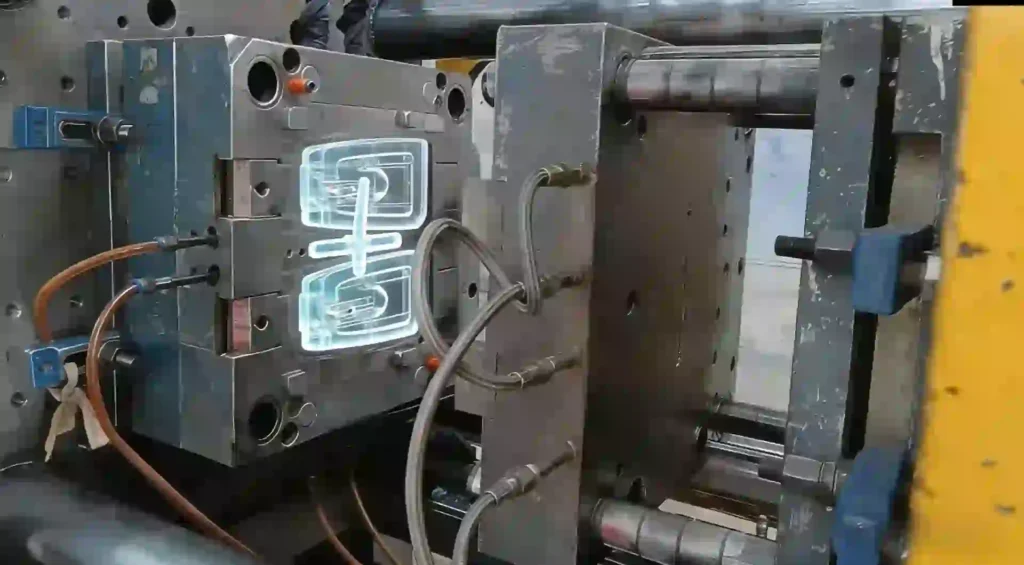
Step 3 – Mold Design & Manufacturing
Our in-house toolmakers design molds specifically for transparent PC:
- Highly polished cavities (SPI A1) for optical clarity
- Balanced cooling to prevent stress and warpage
- Gate placement to avoid visible marks
- Venting to eliminate burning and splay
Step 4 – Molding & Quality Control
We run your parts on all-electric machines for precision and repeatability. During production:
- First articles are inspected (CMM, visual)
- In-process checks monitor clarity and dimensions
- Final inspection ensures every part meets specs
Step 5 – Secondary Operations
Need more than just a housing? We offer:
- Laser marking for serial numbers or logos
- Pad printing for graphics
- Ultrasonic welding for assembly
- Protective film application to prevent scratches
Design Tips for Transparent PC Enclosures
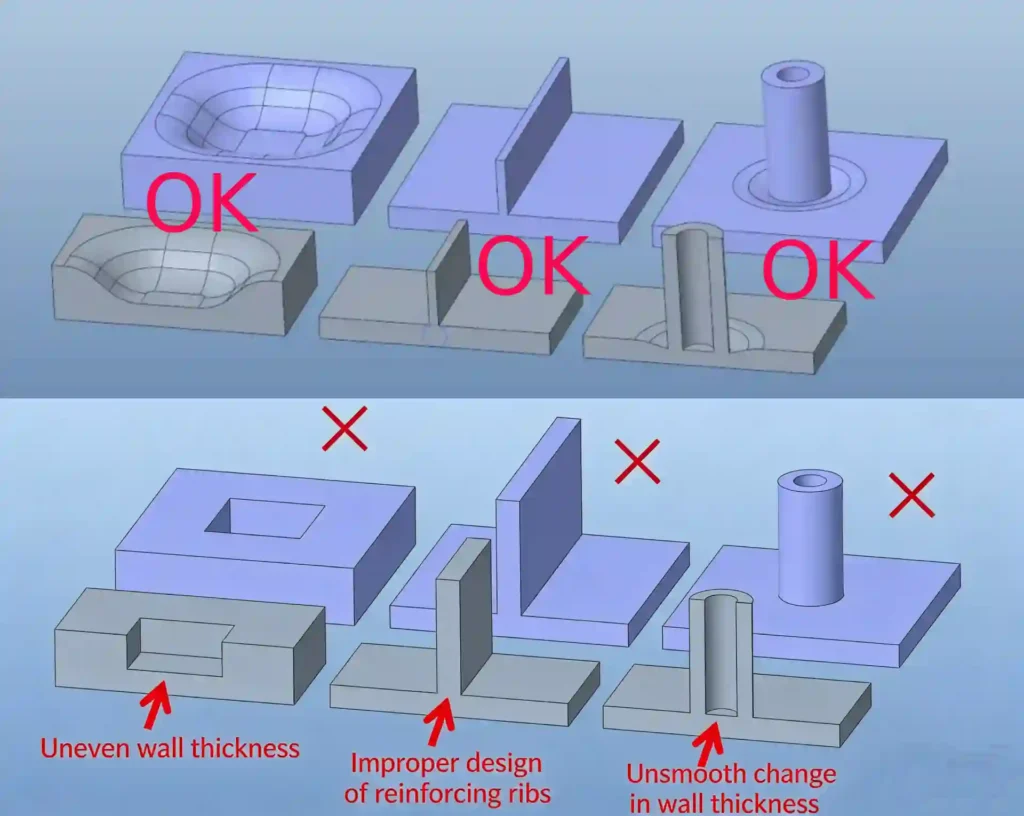
To achieve the best optical clarity and structural integrity:
Wall Thickness
Keep walls between 1.5 mm and 3.0 mm. Uniform thickness prevents sink marks and internal stress that can distort clarity.
Gate Location
Place gates in non‑cosmetic areas, such as edges or hidden surfaces. Avoid placing gates where flow marks would be visible.
Draft Angles
Add 1–2° draft to vertical walls. For textured areas, add 1° per 0.001″ of texture depth.
Ribs and Bosses
Ribs should be 50–60% of nominal wall. Bosses should be cored out to avoid thick sections that cause sinks.
Avoid Sharp Corners
Sharp corners create stress concentrations that can lead to cracking. Use radii wherever possible.
For a deeper look at PC material properties and design guidelines, refer to our PC vs acrylic comparison guide .
Quality Assurance for Transparent Parts
We take extra care with transparent parts:
- First article inspection report – full dimensions, photos
- Material certification – traceability to resin lot
- In‑process SPC – monitoring of critical dimensions
- Visual inspection under controlled lighting – checks for haze, bubbles, scratches
- Clarity measurement – light transmission testing upon request
Frequently Asked Questions
Q1: Can you achieve optical-grade clarity in polycarbonate?
A: Yes, with highly polished molds and precise process control, we achieve excellent clarity suitable for displays and lenses.
Q2: Do you offer UV-stabilized polycarbonate?
A: Yes, we source UV-stabilized grades for outdoor applications to prevent yellowing.
Q3: What is the maximum size for a polycarbonate enclosure?
A: We can mold enclosures up to 500 mm depending on part geometry. Contact us with your dimensions.
Q4: Can you add textures to transparent parts?
A: Texturing reduces clarity, but we can add textures to non‑transparent areas or edges.
Q5: How do you prevent bubbles or splay in clear parts?
A: Proper drying of PC (at 120°C for 4–6 hours) and optimized processing eliminate these defects.
Q6: Do you offer flame-retardant polycarbonate?
A: Yes, we can source UL94 V-0 rated PC for applications requiring fire safety.