How much does injection molding cost? It is one of the first questions buyers ask. The answer is not simple. Injection molding cost depends on many factors: mold complexity, material choice, part size, and volume. This guide breaks down each cost driver. You will learn how to read an injection molding quote, what questions to ask, and how to save money without risking quality. Whether you need one prototype or millions of parts, understanding costs helps you make better decisions.
The Two Main Costs: Tooling vs. Piece Price
Every injection molding project has two separate costs.
Tooling Cost (The Mold)
The mold is the biggest upfront cost. It is a one-time expense. You pay for design, steel, machining, and testing. A simple mold may cost $3,000. A complex production mold can cost $100,000 or more.
Piece Price (Per Part)
This is the cost for each part. It includes material, machine time, labor, and profit. Piece price matters most for high volumes. A small difference in piece price adds up fast.
Why this matters: A low tooling quote may hide high piece prices. Or a low piece price may mean a cheap mold that fails early. Always look at both.
What Drives Mold Cost?
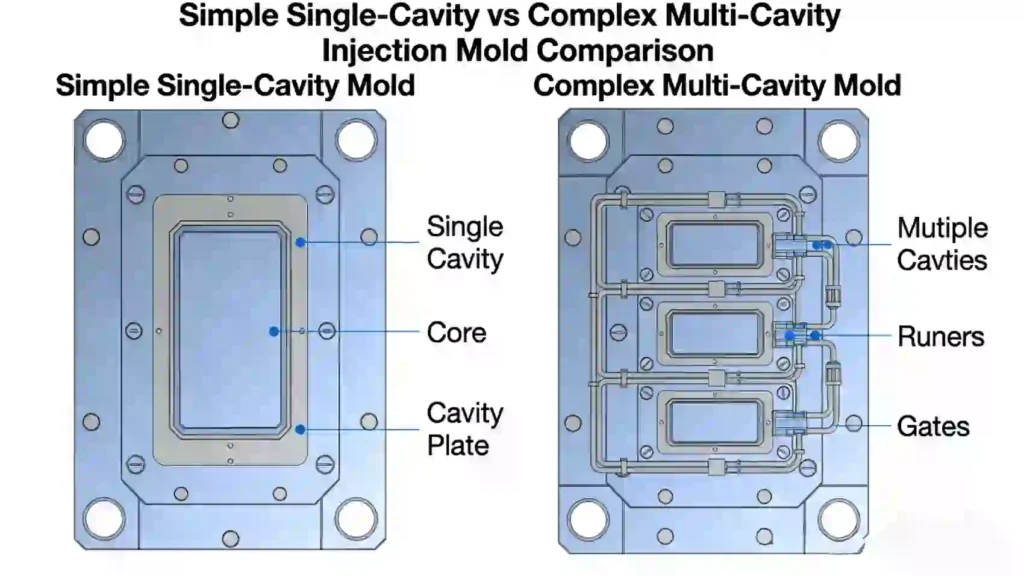
Cavity Count
A mold with one cavity makes one part per cycle. A mold with four cavities makes four parts per cycle. More cavities cost more upfront but lower the piece price.
- Single cavity: $3,000–$10,000
- Multi-cavity (4–8): $15,000–$50,000
- High cavitation (16+): $50,000–$150,000+
Mold Complexity
Simple molds have two halves that open and close. Complex molds need:
- Slides: For side holes or undercuts
- Lifters: For internal features
- Unscrewing mechanisms: For threaded parts
- Hot runner systems: Keep material molten in the runner
Each feature adds cost. A simple mold might cost $5,000. A mold with four slides and a hot runner could cost $40,000.
Steel Type
- P20 steel: Standard for most molds. Good for millions of cycles.
- H13 steel: Harder, for abrasive materials like glass-filled nylon.
- Stainless steel: For medical or food-grade molds that need corrosion resistance.
- Aluminum: For prototype molds (low volume, fast turnaround).
Mold Size
Bigger parts need bigger molds. Bigger molds need bigger machines. Size drives steel cost and machining time.
Real example: A client wanted a large automotive part. The mold weighed 3 tons. Steel alone cost $25,000. Total tooling was $85,000. But per-part cost was very low because the mold ran fast and lasted years.
Cheap molds often use low-grade steel or skip heat treatment. They wear out fast. We have seen molds fail after 50,000 cycles when they should have lasted a million. You get what you pay for.
our custom injection mold manufacturing services
What Drives Piece Price?
Material Cost
Material cost per kilogram varies a lot.
- Commodity plastics (PP, PS): $1–$2 per kg
- Engineering plastics (PC, Nylon): $3–$8 per kg
- High-performance plastics (PEEK, PEI): $30–$100+ per kg
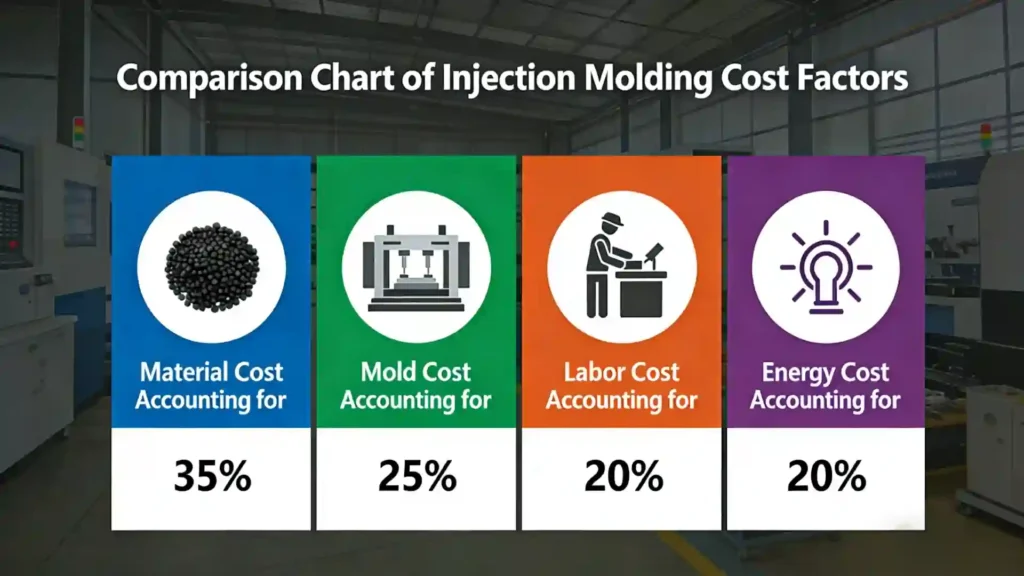
But material cost is not just price per kg. Yield matters. A material that flows well may use less energy and cycle faster.
Cycle Time
Cycle time is the total time to make one shot of parts. It includes injection, cooling, mold open, and ejection. Faster cycles mean more parts per hour, lowering piece price.
- Small parts: 10–20 seconds
- Medium parts: 30–60 seconds
- Large parts: 60–120+ seconds
Cooling is often the longest part. Good mold design with efficient cooling cuts cycle time.
Part Weight and Size
Heavier parts use more material. Bigger parts need bigger machines. Machine hourly rates go up with size. A 50-ton machine may cost $50–$80 per hour. A 500-ton machine may cost $150–$250 per hour.
Volume
Volume spreads the tooling cost. For 1,000 parts, tooling may be $10 per part. For 1 million parts, tooling may be $0.10 per part.
Secondary Operations
Does the part need assembly? Printing? Packaging? Each step adds cost. Our plastic parts secondary operations are done in-house to save time and money.
Cost Comparison Table – Quick Reference
| Factor | Low Cost | Medium Cost | High Cost | Why |
|---|---|---|---|---|
| Mold cavities | 1 cavity | 2–4 cavities | 8+ cavities | More cavities = more steel, more machining |
| Part complexity | Simple shape | Ribs, bosses | Slides, lifters | Complex tools take longer to build |
| Material | PP, PE, PS | ABS, PC, Nylon | PEEK, LCP, PPS | Material price per kg varies widely |
| Tolerance | ±0.010 in | ±0.005 in | ±0.001 in | Tight tolerances need more care, slower cycles |
| Surface finish | SPI C (matte) | SPI B (semi-gloss) | SPI A (gloss) | Polished molds cost more, take longer |
| Volume | 1,000 pcs | 100,000 pcs | 1,000,000+ pcs | Tooling cost spreads over more parts |
How to Get an Accurate Injection Molding Quote
What to Send
To get a good quote, send:
- 3D model (STEP or IGES)
- Material preference (or let us suggest)
- Annual or total volume
- Target part weight (if known)
- Quality requirements (ISO class, medical, etc.)
- Any special needs (printing, assembly, packaging)
What a Good Quote Includes
A complete quote should show:
- Tooling cost (itemized if possible)
- Piece price at different volumes
- Material cost per kg and per part
- Estimated cycle time
- Payment terms (typically 50% deposit, 50% at sample approval)
- Lead time for first articles
- Lead time for production after approval
Red Flags in Quotes
- Very low tooling cost but high piece price (they make money on parts)
- No DFM feedback (they did not review your design)
- Vague lead times
- No quality information
We have seen clients accept a low quote, then face endless change orders. The final cost was triple the original. Ask questions early.
Ways to Reduce Injection Molding Costs
Design for Manufacturing
Small design changes save big money.
- Keep wall thickness uniform
- Use draft angles (1–2 degrees)
- Avoid sharp corners
- Combine multiple parts into one (reduce assembly)
Our design guidelines for injection molding show how.
Choose the Right Material
Do not over-specify. Use commodity plastics unless you really need engineering properties. Test if a lower-cost grade works.
Optimize Cycle Time
Work with your molder to balance cooling and quality. Faster cycles cut cost, but too fast causes defects.
Plan Volumes Wisely
If you are unsure about demand, start with a prototype mold (aluminum). Later, invest in a production mold for high volume. This spreads risk.
Consolidate Vendors
One molder doing molding, assembly, and packaging saves shipping and management cost. At Miracles Manufacturing, we offer all three.
Real example: A client had five parts made by three vendors. We combined them into one family mold and did assembly in-house. They saved 22% on total cost.
Prototype vs. Production Tooling – Which First?
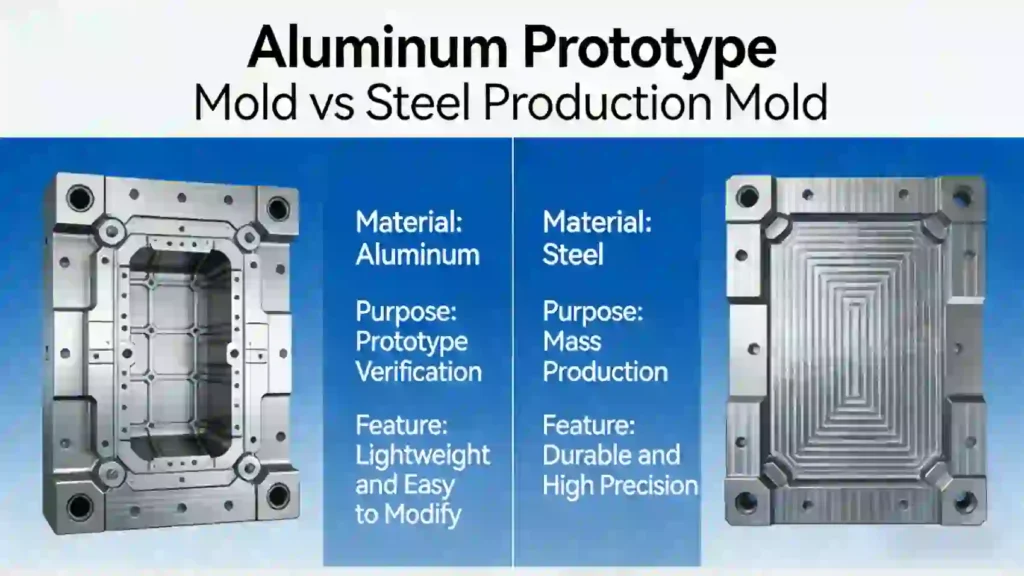
| Factor | Prototype Mold (Aluminum) | Production Mold (Steel) |
|---|---|---|
| Cost | $3,000–$10,000 | $15,000–$100,000+ |
| Lead time | 3–5 weeks | 8–12 weeks |
| Volume | 100–10,000 parts | 50,000+ parts |
| Changes | Easy to modify | Hard to change |
| Best for | Testing, market launch | Mass production |
Many clients start with a prototype mold. They test the market, then invest in a production mold when demand is proven. This is smart risk management.
The Quotation Process at Miracles Manufacturing

Here is what happens when you request a quote from us.
Step 1 – Design Review
Our engineers look at your 3D model. We check for draft, wall thickness, gate placement, and potential defects. We send you DFM feedback within 2–3 days.
Step 2 – Material Recommendation
Based on your application, we suggest 2–3 material options. We explain pros, cons, and cost differences.
Step 3 – Cost Breakdown
You receive a clear quote showing:
- Tooling cost (itemized)
- Piece price at your target volume
- Material cost per part
- Estimated cycle time
- Lead times
Step 4 – Discussion
We talk through the numbers. If you need adjustments, we work with you. No pressure, just information.
Step 5 – Sample Approval
After tooling is built, we ship samples. You test them. You approve them. Only then do we start production.
Frequently Asked Questions
Q1: How much does an injection mold cost?
A: Simple molds start around $3,000. Complex production molds can be $50,000 or more. It depends on size, cavities, and features.
Q2: What is the cheapest material for injection molding?
A: Polypropylene (PP) and polystyrene (PS) are usually the lowest cost. But choose based on your part needs, not just price.
Q3: How is piece price calculated?
A: Material cost + machine time + labor + overhead + profit. Machine time depends on cycle time and machine size.
Q4: Can I save money by using a family mold?
A: Yes, if you need multiple parts in the same material. One cycle makes all parts. Tooling cost is shared.
Q5: Should I get multiple quotes?
A: Yes, but compare carefully. The lowest quote may not be the best value. Look at DFM feedback, communication, and quality.
Q6: How do I know if a quote is fair?
A: Ask for breakdowns. A fair quote shows tooling, material, and machine time separately. Vague quotes hide costs.
Summary
Understanding injection molding cost helps you budget wisely and avoid surprises. Remember:
- Tooling is a one-time cost; piece price repeats.
- Design, material, and volume drive costs.
- Get clear quotes with breakdowns.
- Start with a prototype mold if volume is uncertain.
At Miracles Manufacturing, we believe in transparent pricing. Our quotes are detailed, our advice is honest, and our parts are quality. If you have a project in mind, we would love to talk.