
Nylon is a strong engineering plastic, but sometimes you need even more strength and stiffness. That is where glass-filled nylon comes in. By adding glass fibers to nylon resin, manufacturers create a material that handles higher loads and temperatures. It is widely used in automotive, industrial, and consumer applications where standard nylon falls short. In this guide, we explore the properties of glass filled nylon, its benefits and challenges, and how to design parts that take full advantage of this reinforced material. If you are considering nylon injection molding with glass fill, this article will help you understand what to expect.
What Is Glass-Filled Nylon?
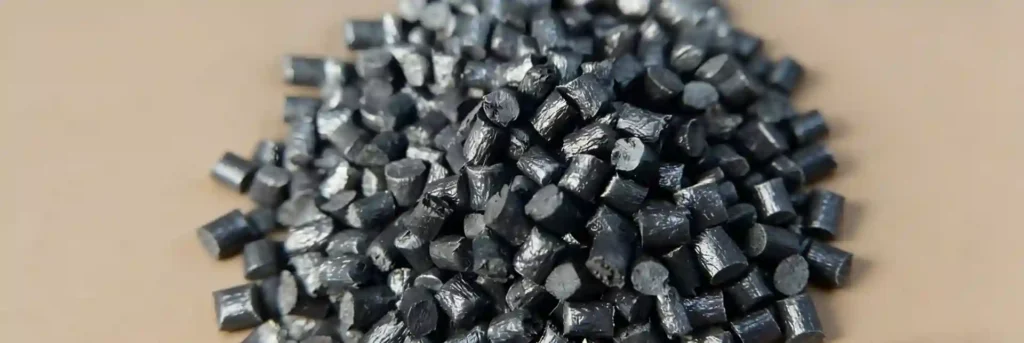
Glass-filled nylon is a composite material. Short glass fibers (typically 10–40% by weight) are mixed into nylon resin before molding. The fibers align during flow and add significant strength and stiffness to the finished part.
Common Base Nylons
- Nylon 6: Good balance of properties, slightly easier to process.
- Nylon 6/6: Higher melting point, better chemical resistance, stiffer.
- Nylon 4/6, 11, 12: Used for specialized applications.
Glass Fiber Content
- 13–15% glass: Moderate reinforcement, improved stiffness.
- 30–33% glass: Most common, excellent strength and heat resistance.
- 40–45% glass: Maximum stiffness, but more brittle and harder to mold.
A common pitfall: Higher glass content is not always better. It increases strength but reduces impact resistance and makes the material more abrasive to molds.
Key Properties of Glass-Filled Nylon
Mechanical Strength
Adding glass fibers increases tensile strength by 2–3 times. Flexural modulus also rises sharply. This makes glass-filled nylon ideal for structural parts that must resist bending or creep.
Heat Deflection Temperature (HDT)
Unfilled nylon has HDT around 65–80°C. Glass-filled grades can reach 200°C or more. This allows parts to perform under the hood or near hot components.
Dimensional Stability
Glass fibers reduce shrinkage and make it more uniform. Parts hold tighter tolerances and warp less. However, shrinkage is anisotropic (different in flow vs. cross-flow direction), so design must account for this.
Chemical Resistance
Nylon naturally resists oils, fuels, and many solvents. Glass fill does not reduce this. However, nylon absorbs moisture, which can affect dimensions and properties.
Wear and Friction
Glass fibers increase abrasion resistance but also make the material more abrasive to mating surfaces. Bearings and gears may need lubrication or a mating material that can handle the wear.
Real‑scenario risk: We had a client who used 40% glass-filled nylon for a gear running against an untreated steel shaft. The gear wore out the shaft quickly. We switched to a lower glass content and added internal lubricant (PTFE) to solve the problem.
Advantages and Disadvantages
| Advantages | Disadvantages |
|---|---|
| High strength-to-weight ratio | Abrasive to molds (increases tool wear) |
| Excellent heat resistance | Anisotropic shrinkage (design critical) |
| Good chemical resistance | Absorbs moisture (parts can swell) |
| Stiff and creep-resistant | Reduced elongation – more brittle |
| Can replace metal in many applications | Higher density than unfilled nylon |
Common Applications of Glass-Filled Nylon
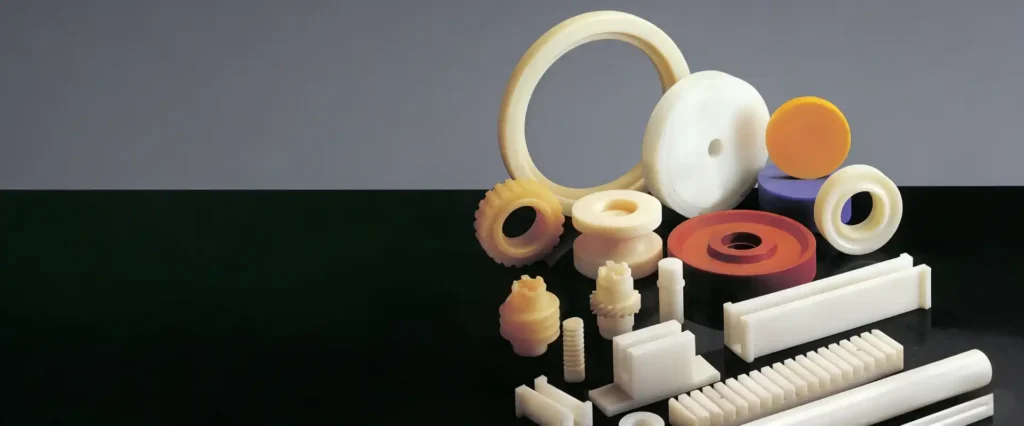
You will find glass-filled nylon in many demanding applications:
- Automotive: Engine covers, intake manifolds, fan blades, fuel system components
- Industrial: Gears, bearings, pump housings, valve components
- Consumer: Power tool housings, lawn and garden equipment
- Aerospace: Brackets, ducting (special grades)
- Sporting goods: Bicycle components, ski bindings
Injection Molding Guidelines for Glass-Filled Nylon
Drying

Nylon absorbs moisture quickly. Glass-filled nylon must be dried before molding. Moisture causes splay, bubbles, and reduced strength. Dry at 80°C for 4–6 hours, or use a dehumidifying dryer. Moisture content should be below 0.2%.
Melt Temperature
Typical melt temperatures range from 270°C to 300°C for nylon 6/6. Higher glass content may need slightly higher temperatures to ensure flow.
Mold Temperature
Mold temperature affects crystallinity and surface finish. For glass-filled nylon, 80–120°C is typical. Higher mold temperatures improve surface appearance but increase cycle time.
Injection Speed and Pressure
Use moderate to high injection speeds to fill the cavity before the material freezes. High pressure is needed to pack out the part, but avoid overpacking which can cause flash.
Gate and Runner Design
Gates should be larger than for unfilled nylon to prevent fiber breakage and reduce shear. Avoid small gates. Use full-round runners for best flow.
Shrinkage and Warpage
Shrinkage is anisotropic – more in flow direction? Actually, in glass-filled materials, shrinkage is often less in flow direction because fibers align and restrict shrinkage. This can cause warpage if not accounted for. Design with symmetry and use mold flow analysis.
Both materials require careful gate and vent design. For more details on material selection, see our injection molding material selection guide.
Common Defects and How to Avoid Them
| Defect | Cause | Solution |
|---|---|---|
| Short shots | Low injection speed, small gates | Increase speed, enlarge gates |
| Weld lines weak | Fibers do not bridge weld line | Raise melt temp, move gate, increase pressure |
| Surface roughness | Low mold temp, poor venting | Increase mold temp, improve venting |
| Flash | High injection pressure, worn mold | Reduce pressure, check mold condition |
| Fiber show (glass on surface) | High shear, small gates | Use larger gates, lower injection speed |
| Warpage | Anisotropic shrinkage, uneven cooling | Balance cooling, design symmetrical parts |
Designing Parts in Glass-Filled Nylon
- Wall thickness: Keep uniform. Avoid thick sections – they cool slowly and may have sink marks (less severe than unfilled).
- Ribs: Use 50–60% of nominal wall thickness. Glass-filled material flows less easily into thin ribs.
- Bosses: Design with adequate draft and consider using collapsible cores for undercuts.
- Tolerances: Allow for anisotropic shrinkage. Work with your molder to establish realistic tolerances.
Glass-Filled Nylon vs. Other Reinforced Plastics
| Material | Strength | Heat Resistance | Cost | Typical Use |
|---|---|---|---|---|
| Glass-filled Nylon | High | High (180–220°C) | $$ | Structural auto parts, industrial gears |
| Glass-filled PBT | Moderate | Moderate (150°C) | $$ | Electrical connectors |
| Glass-filled PP | Low–Moderate | Low (120°C) | $ | Appliances, lower-cost parts |
| Carbon-filled Nylon | Very high | High | $$$$ | Aerospace, high-performance |
Custom Glass-Filled Nylon Molding at Miracles Manufacturing
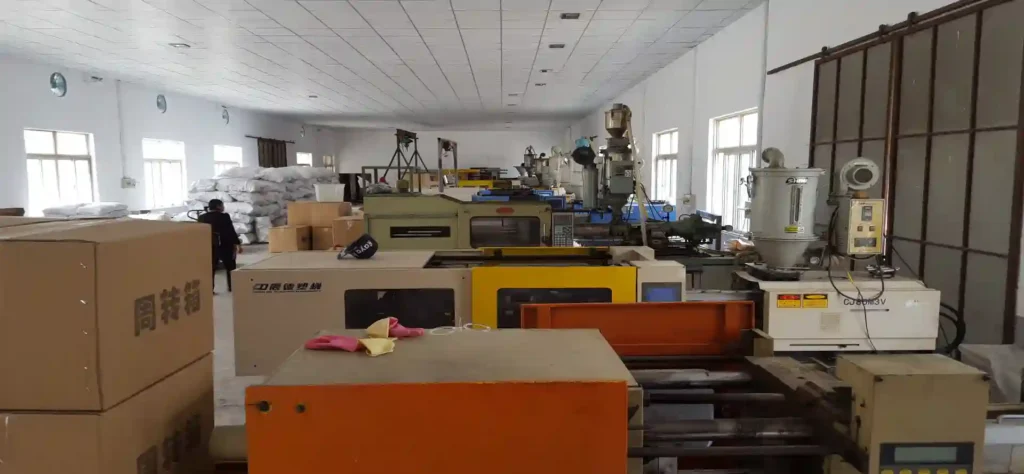
At Miracles Manufacturing, we have extensive experience with glass-filled nylons. We understand how to design molds that resist abrasion, control warpage, and produce consistent parts. Our team can help you:
- Select the right glass content and base nylon.
- Optimize part design for moldability.
- Choose mold materials (hardened steel) to withstand abrasion.
- Troubleshoot issues like fiber show or warpage.
Whether you need automotive components or industrial parts, we deliver quality. Learn more about our nylon injection molding services.
Frequently Asked Questions
Q1: Is glass-filled nylon stronger than aluminum?
A: In terms of strength-to-weight ratio, yes – it can be lighter. But absolute strength depends on glass content and design. For many applications, it replaces metal.
Q2: Does glass-filled nylon absorb water?
A: Yes, like all nylons, it absorbs moisture. This can change dimensions and properties. For precision parts, consider nylon grades with lower moisture absorption (like nylon 12) or seal the part.
Q3: Can I weld glass-filled nylon?
A: Ultrasonic welding is possible but requires careful design. The glass fibers can interfere with the weld. Mechanical fastening or adhesives are often used.
Q4: How does glass content affect mold life?
A: Higher glass content is more abrasive. Molds must be made from hardened tool steel (like H13) and may need special coatings to extend life.
Q5: Is glass-filled nylon recyclable?
A: Yes, regrind can be used, but the fibers may break during reprocessing, reducing mechanical properties. Regrind levels should be limited.
Q6: What is the maximum glass content available?
A: Typically up to 50% for some grades. But 30–40% is most common. Higher content becomes difficult to mold and very brittle.
Summary
Glass-filled nylon is a remarkable material that bridges the gap between plastics and metals. It offers high strength, stiffness, and heat resistance at a fraction of the weight of metal. But it also brings challenges: abrasive wear, anisotropic shrinkage, and moisture sensitivity. With proper design and experienced molding partners, you can harness its full potential.
At Miracles Manufacturing, we have the expertise to guide you through every step. Contact us to discuss your next project.